

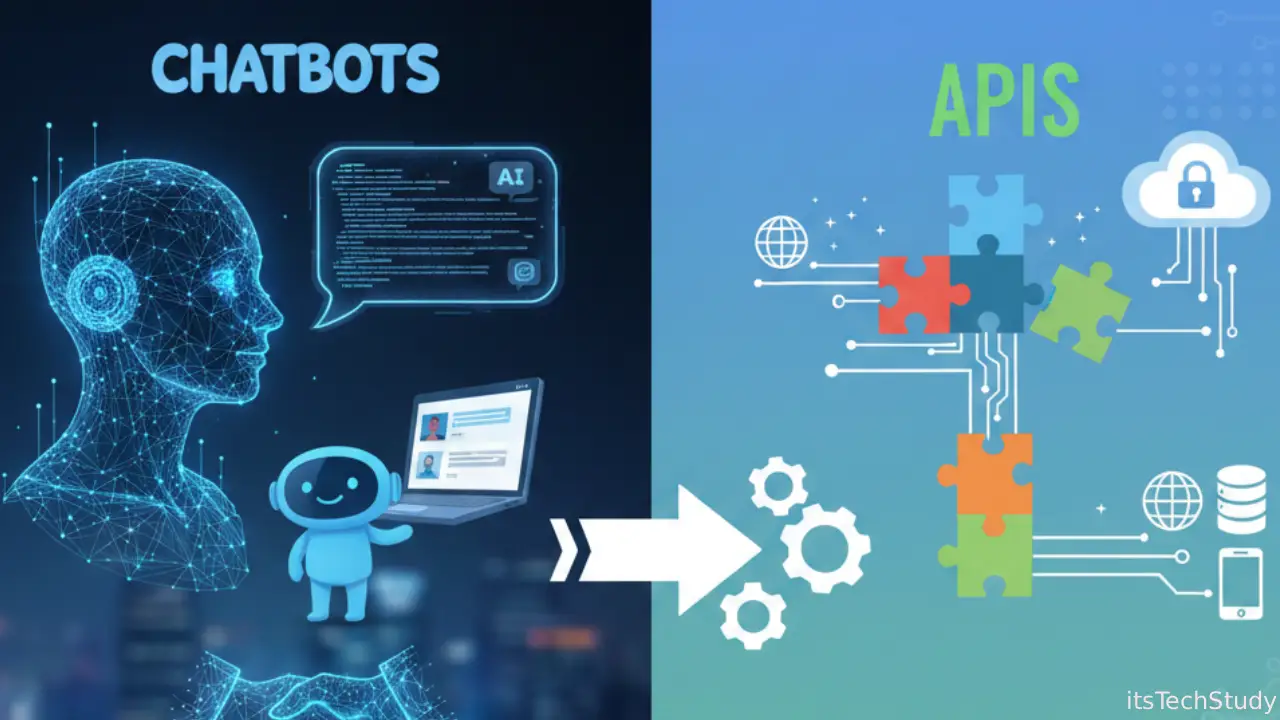
Introduction: The New Era of Human–Machine Communication
Not too long ago, customer support meant long call queues, ticket forms, and waiting days for replies. Business integrations required complex software ecosystems and expensive development. Fast forward to 2025, and the landscape looks drastically different. Thanks to chatbots and APIs (Application Programming Interfaces), businesses deliver instant responses, automate workflows, and connect digital services like never before..
But here’s the catch – while the demand for automation and conversational AI skyrockets, many businesses still struggle with questions like:
- How do chatbots actually work with APIs?
- What tools or platforms should I choose?
- Is it secure and scalable for business needs?
- Where do common failures occur – and how can I avoid them?
This article digs deep into the world of chatbots & APIs, uncovering how they work, real benefits, pitfalls to avoid, and practical steps to create a future-proof automation ecosystem. Whether you’re a developer, product owner, or a tech-curious reader, you’ll find insights that help you build smarter, connected systems confidently.
What Are Chatbots & APIs? A Simple Explanation
Chatbots: The Conversational Interface
A chatbot is a software application designed to simulate human conversation through text or voice interactions. They can live in messaging apps, websites, mobile apps, voice assistants, and more.
Common Types of Chatbots
- Rule-based Chatbots – respond based on predefined flows
- AI-powered Chatbots (NLP) – understand context and intent
- Generative Chatbots – create human-like responses using LLM models
- Hybrid Models – combine rule-based and AI systems
APIs: The Digital Bridge
An API acts as a bridge that lets different software communicate. It enables a chatbot to:
- fetch weather information
- check order status
- update a CRM record
- integrate with payment systems
- control IoT devices
In short:
Chatbots talk to people, APIs talk to systems – together they create automation magic.
Why Chatbots Need APIs to Be Truly Powerful
A chatbot with no API access is like a smartphone with no internet — functional but limited. APIs turn a chatbot into a smart digital worker.
Key Functions Enabled by APIs
| API Capability | How It Helps Chatbots | Example |
|---|---|---|
| Data Retrieval | Pulls real-time data to answer user queries | Flight updates, bank balance |
| Transactions | Processes actions securely | Payments, bookings |
| Personalization | Tailors responses per user | Product suggestions |
| System Control | Executes commands across software | IoT home automation |
| Analytics | Tracks usage & performance | Engagement metrics |
How Chatbots & APIs Communicate: Behind the Scenes
A Step-By-Step Flow
- User asks a question or gives a command.
- Chatbot analyzes text using NLP or AI engines.
- System identifies intent and required action.
- Chatbot calls the relevant API endpoint.
- API pulls/pushes data from connected platforms.
- API returns structured data (JSON/XML).
- Chatbot converts data into human-friendly response.
- Final response sent to the user – instantly.
This workflow happens in milliseconds – creating the illusion of real conversation.
Benefits of Chatbots & APIs for Businesses
The impact goes beyond cost savings – it’s about experience, agility, and scalability.
Major Advantages
- 24/7 customer support with instant responses
- Faster onboarding & customer service resolution
- Scalable automation without hiring more staff
- Reduces operational and integration costs
- Improves user experience with personalization
- Seamless platform-to-platform connectivity
Pros & Cons: What You Should Know Before Implementation
Pros
- ✔️ Faster customer response & engagement
- ✔️ Highly scalable without infrastructure burden
- ✔️ Easy integration with cloud services
- ✔️ Boosts customer satisfaction and retention
- ✔️ Data-driven insights for product improvement
Cons
- Complex initial setup for beginners
- Requires secure API architecture
- May fail without proper NLP training
- Needs ongoing maintenance & optimization
Real-World Examples of Chatbots Powered by APIs
| Use Case | Industry | API Partnership |
|---|---|---|
| Order Tracking Bot | eCommerce | Shipping & logistics APIs |
| Medical Appointment Bot | Healthcare | EMR & hospital APIs |
| Balance Checker Assistant | Banking | Core banking REST APIs |
| Travel Planner | Tourism | Flight/hotel booking APIs |
| IoT Control Bot | Smart Homes | Home automation APIs |
How to Build a Chatbot with API Integration (Beginner Roadmap)
1. Plan the Use Case
Define what you want your chatbot to accomplish:
- customer support
- sales automation
- product search
- appointment scheduling
2. Choose the Right Tech Stack
Popular Chatbot Platforms
- Dialogflow CX
- Microsoft Bot Framework
- Rasa
- Botpress
- OpenAI with custom endpoints
API Technology Choices
- REST APIs (most common)
- GraphQL APIs (highly flexible)
- Webhooks for real-time triggers
- OAuth for authentication
3. Train or Program Your Bot
- Define intents & responses
- Add fallback/error handling
- Use NLP to understand user context
4. Connect APIs & Test
- Test responses with Postman
- Validate authentication & security
- Optimize speed & reduce API latency
5. Deploy, Monitor & Optimize
- Add analytics dashboards
- Monitor user satisfaction
- Update conversation flows based on feedback
Security Best Practices for Chatbots & APIs
Protecting user data isn’t negotiable – it’s essential.
Top Security Measures
- Use SSL/TLS encryption
- Token-based authentication (OAuth, JWT)
- Input validation (avoid injection attacks)
- Rate limiting to prevent abuse
- Data privacy compliance (GDPR, ISO standards)
Conclusion: The Future of Chatbots & APIs
The fusion of chatbots and APIs is transforming digital interactions – from automation to personalization and beyond. As businesses continue adopting AI and real-time integrations, the ability to connect systems through APIs will define competitive advantage.
If you’re planning an automation strategy in 2025 and beyond, the message is clear:
Start with chatbots.
Power them with APIs.
Build automation that actually works for you – not against you.
The future belongs to connected, conversational, and intelligent systems – and the best time to start building is now.

About the Author
Amelia Morgan is a Editor at itsTechStudy.com with 15+ years of experience in the technology industry. I write about emerging innovations, AI, and digital trends-making complex topics simple and engaging for readers.




No Comments Yet
Be the first to share your thoughts.
Leave a Comment