

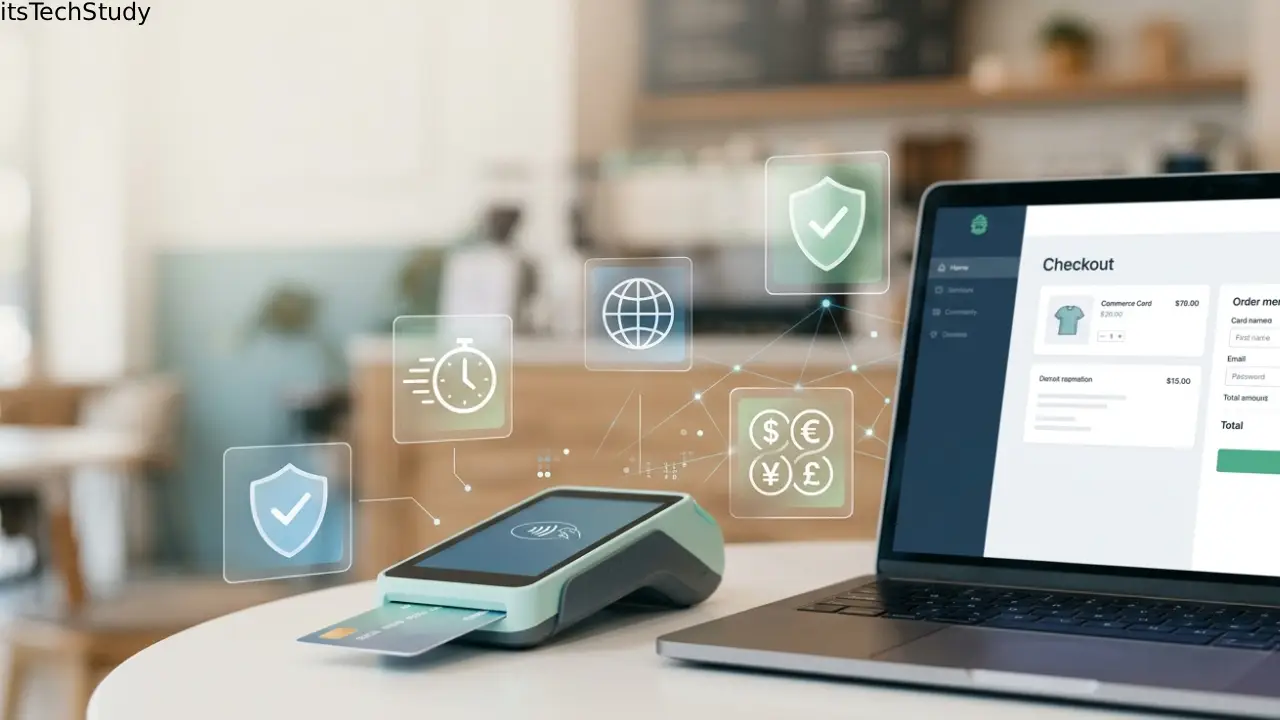
Introduction: Why Payment Gateways Matter More Than Ever in 2026
A few years ago, many businesses treated payment gateways like a basic backend tool-something you plugged into a website once and forgot about. If the checkout page loaded and customers could pay by card, that was considered “good enough.” But in 2026, that mindset is outdated.
Today, the payment gateway is no longer just a transaction processor. It sits at the center of your customer experience, your security posture, your conversion rate, and even your global growth strategy. In practical terms, a slow or outdated gateway can cost you revenue before you even realize it. Modern shoppers expect one-click checkouts, mobile wallets, fast authentication, multiple payment methods, and near-instant trust signals. If they don’t get that, they leave.
That’s a real business problem. Recent ecommerce research shows checkout abandonment remains extremely high-around 70% on average, and limited payment options are still a measurable reason shoppers drop off during checkout. Some 2026 checkout optimization reports also show that offering more payment choices can lift conversions by 12–15% in many ecommerce scenarios.
At the same time, security and compliance expectations have tightened. With PCI DSS 4.0 requirements now fully enforced, merchants and third-party service providers can no longer treat payment security as a checkbox. As of April 1, 2025, the enhanced requirements are no longer optional for organizations handling card payments.
In other words, payment gateways are now a growth tool, a trust tool, and a risk-management tool all in one.
This guide breaks down what payment gateways are, how they work, which features matter most in 2026, how to compare providers, and what businesses should watch before choosing one. Whether you run a startup, an ecommerce store, a SaaS product, or a digital service business, understanding payment gateways is no longer optional-it’s foundational.
What Is a Payment Gateway?
A payment gateway is the technology that securely captures, encrypts, and transmits payment information between a customer, a merchant, and the financial institutions involved in a transaction.
In simple terms, it’s the bridge between your checkout page and the payment network.
When a customer enters card details, uses UPI, pays through a digital wallet, or selects Buy Now Pay Later (BNPL), the payment gateway helps:
- Collect the payment data securely
- Encrypt and tokenize sensitive information
- Send the request for authorization
- Return approval or decline in real time
- Trigger settlement so the merchant gets paid
Without a payment gateway, online businesses can’t safely accept digital payments at scale.
How Payment Gateways Work Behind the Scenes
Even though the customer only sees a “Pay Now” button, a lot happens in a few seconds.
Step-by-Step Payment Gateway Flow
- Customer initiates payment
They choose a payment method such as a debit card, credit card, UPI, net banking, wallet, or BNPL. - Gateway encrypts payment data
Sensitive information is protected before transmission. - Payment request goes to processor/acquirer
The gateway routes the transaction to the acquiring bank or payment processor. - Card network or payment rail validates the request
This may involve card networks, UPI infrastructure, wallet providers, or bank systems. - Issuing bank approves or declines
The customer’s bank checks funds, fraud signals, and authentication. - Gateway returns the response
The merchant site receives an approval, decline, or pending result. - Settlement happens later
Funds are transferred to the merchant account based on the gateway’s settlement cycle (T+1, T+2, etc.).
Why This Process Matters
Every extra delay, redirect, or failed authorization increases friction. In 2026, “invisible checkout” and faster payment flows are becoming the standard expectation, especially on mobile. Industry trend analysis shows businesses are increasingly prioritizing one-click checkout, alternative payment methods, and AI-based routing to reduce friction and improve authorization rates.
Why Payment Gateways Are Critical for Modern Online Businesses
A strong payment gateway does much more than process money.
Key Business Benefits
- Higher conversion rates
- Better checkout experience
- Improved trust and security
- Access to local and global payment methods
- Reduced fraud exposure
- Faster settlements and cash flow
- Scalability for subscriptions and recurring billing
- Better analytics and reconciliation
For many ecommerce brands, the checkout is where revenue is either won or lost. One 2026 UX-focused checkout study found that one-page checkout can reduce abandonment by around 20%, while forced account creation still drives major drop-offs. It also noted a 12–15% conversion lift from broader payment method support.
Types of Payment Gateways
Not all gateways are built the same. The right type depends on your business model, geography, and technical stack.
1. Hosted Payment Gateways
Customers are redirected to a secure hosted payment page.
Examples: PayPal-style flows, some legacy hosted checkout systems
Best for:
- Small businesses
- Quick setup
- Lower technical complexity
Pros:
- Easier compliance burden
- Fast to launch
- Often beginner-friendly
Cons:
- Less branding control
- Can reduce conversion due to redirects
- Limited checkout customization
2. Integrated / On-Site Payment Gateways
Customers complete payment directly on your website or app.
Best for:
- Ecommerce brands
- SaaS businesses
- Businesses optimizing UX and conversion
Pros:
- Better user experience
- More control over branding
- Improved conversion potential
- Easier experimentation and A/B testing
Cons:
- More complex integration
- Greater security responsibilities
- Can expand PCI scope depending on implementation
3. API-First Payment Gateways
These are developer-focused platforms offering APIs, SDKs, webhooks, and modular payment tools.
Best for:
- Startups
- SaaS products
- Platforms and marketplaces
- Businesses needing custom workflows
Pros:
- Flexible
- Scalable
- Supports subscriptions, split payments, marketplaces, and advanced routing
Cons:
- Requires development resources
- Can be overkill for simple stores
Essential Features to Look for in a Payment Gateway in 2026
Choosing based on fees alone is a mistake. The best gateway is the one that fits your business model and customer behavior.
Must-Have Features Checklist
1. Multiple Payment Methods
Look for support for:
- Credit cards
- Debit cards
- UPI
- Net banking
- Digital wallets
- BNPL
- International cards
- Local payment methods by region
Alternative payment methods are becoming increasingly important. Some industry analysis suggests that alternative methods may represent the majority of online payments in many markets, making “card-only” checkouts increasingly risky.
2. Mobile-First Checkout
Since mobile drives a huge share of ecommerce traffic, your gateway must support:
- Responsive checkout
- Autofill
- One-tap wallets
- Fast authentication
- Low-latency payment flows
3. Security and Tokenization
Look for:
- PCI DSS 4.0 alignment
- Tokenization
- End-to-end encryption
- 3D Secure / strong customer authentication
- Fraud scoring
- Device fingerprinting
4. Fast Settlement Cycles
Cash flow matters. Compare:
- T+1 settlement
- T+2 settlement
- Weekend settlement availability
- Instant settlement options (if available)
5. Subscription & Recurring Billing
Important for:
- SaaS
- Memberships
- OTT/content businesses
- EdTech
- Cloud tools
6. Developer Tools
A modern gateway should offer:
- Clear API documentation
- SDKs
- Webhooks
- Sandbox/testing environment
- Error logs
- Dashboard reporting
7. Smart Routing and Retry Logic
This is increasingly valuable for larger merchants. AI-driven routing and retry logic can improve authorization rates and reduce payment failures.
Payment Gateway Comparison Table (2026 Overview)
Note: Pricing and features vary by country, volume, risk category, and contract. Always verify current terms directly with the provider.
| Payment Gateway | Best For | Key Strengths | Possible Limitations | Typical Fit |
|---|---|---|---|---|
| Stripe | SaaS, startups, developers | Excellent APIs, subscriptions, global support | Can be complex for non-technical users | Global digital businesses |
| Razorpay | India-focused businesses | Strong India coverage, UPI, easy integrations | International depth may vary by use case | Indian ecommerce and startups |
| PayPal | Cross-border payments, trust | Global brand recognition, easy buyer familiarity | Higher effective international fees in some cases | Freelancers, SMBs, cross-border sellers |
| Adyen | Enterprise and omnichannel | Strong enterprise-grade infrastructure, global acquiring | Usually better suited for larger merchants | Large brands, global commerce |
| Square | Small businesses and omnichannel retail | Easy onboarding, POS + online ecosystem | Availability varies by region | SMB retail and service businesses |
| PayU | Emerging markets and ecommerce | Broad merchant adoption in many markets | Feature depth varies by plan/region | Mid-sized online businesses |
| Cashfree | India startups and D2C | Fast settlements, broad payment mix | May require evaluation for complex international needs | Indian D2C and startups |
Some 2026 market comparisons for India-based startups suggest settlement cycles and total costs can vary meaningfully across gateways, especially once GST, FX charges, refund costs, and chargeback-related expenses are included. For example, “advertised” rates can understate the real total cost of ownership.
Payment Gateway Fees: What Businesses Often Miss
A lot of founders compare only the headline MDR (merchant discount rate). That’s not enough.
Common Payment Gateway Costs
- Transaction fee (% per payment)
- Fixed fee per transaction
- International transaction fee
- Currency conversion / FX markup
- Chargeback fee
- Refund processing fee
- Annual platform fee
- Settlement acceleration fee
- Subscription or platform fees for premium features
Hidden Cost Warning
A gateway with a “lower” base fee may still cost more if it adds:
- Higher FX markups
- Expensive chargeback handling
- Refund deductions
- Slower settlement impacting cash flow
- Limited success rates causing more failed transactions
That’s why businesses should compare total cost of ownership (TCO), not just MDR.
Payment Gateway Security and PCI DSS 4.0: What Changed
Security is no longer just a technical issue—it’s a business continuity issue.
Why PCI DSS 4.0 Matters
PCI DSS 4.0 introduced stronger requirements for merchants and payment service providers handling card data. By April 1, 2025, the enhanced requirements that were previously “best practice” became mandatory.
What Businesses Should Focus On
- Stronger access controls
- MFA for sensitive access
- Secure payment page script management
- Better monitoring and logging
- Regular vulnerability scans
- Penetration testing
- Inventory and validation of scripts touching payment pages
Recent industry and practitioner discussions show that client-side payment page controls—especially around scripts and browser-based risk—have become a major compliance hotspot under PCI DSS 4.0.
Practical Tip
If you want lower compliance complexity:
- Prefer tokenized or hosted fields
- Avoid storing card data directly
- Minimize third-party scripts on payment pages
- Ask your gateway for PCI guidance and attestation documents
Pros and Cons of Using Modern Payment Gateways
Pros
- Accept payments 24/7 online
- Improve customer trust
- Support multiple payment methods
- Increase conversion with better checkout UX
- Reduce fraud through built-in controls
- Enable subscriptions and recurring revenue
- Expand into international markets
- Simplify reconciliation and reporting
Cons
- Transaction fees can add up
- Compliance responsibilities still exist
- Some gateways have hidden charges
- Failed payments can hurt conversion
- Regional limitations may affect expansion
- Integration quality varies by platform
- Chargebacks remain a business risk
How to Choose the Best Payment Gateway for Your Business
There’s no universal “best” gateway. The right choice depends on your exact business needs.
Use This 7-Step Framework
1. Define Your Business Model
Are you:
- Running an ecommerce store?
- Selling subscriptions?
- Building a marketplace?
- Offering digital services?
- Operating in India only or globally?
2. Map Your Customer Payment Preferences
Your customers may prefer:
- UPI
- Wallets
- Cards
- EMI/BNPL
- International payment methods
3. Compare Total Costs
Don’t stop at the transaction rate. Check:
- FX fees
- Refund charges
- Chargeback costs
- Settlement speed
- Hidden platform fees
4. Review Checkout UX
Ask:
- Is it mobile-friendly?
- Does it support one-click payments?
- Is there a redirect?
- How fast is the payment flow?
5. Audit Security and Compliance Support
Look for:
- PCI-ready tools
- Tokenization
- Fraud controls
- Documentation
- Webhook security
6. Test Integration Quality
A poor API or buggy plugin can cost real money.
7. Run a Real-World Pilot
Before fully switching:
- Test approval rates
- Measure failed payment rates
- Track conversion changes
- Monitor refund workflows
- Review customer support response time
Common Payment Gateway Mistakes Businesses Should Avoid
1. Choosing Based Only on Price
Cheap can become expensive if conversions drop.
2. Ignoring Mobile Checkout
Mobile abandonment is often higher than desktop, making mobile-first optimization essential.
3. Offering Too Few Payment Options
Limited payment choice still causes avoidable checkout abandonment.
4. Not Planning for International Growth
Global expansion gets messy fast if your gateway lacks local payment methods or strong FX support.
5. Overloading Payment Pages With Third-Party Scripts
This can hurt both performance and PCI scope.
6. Skipping Failure Recovery
Smart retries, fallback routing, and clear error messages matter more than most merchants realize.
Best Practices to Improve Payment Success Rates in 2026
Quick Wins for Better Checkout Performance
- Offer at least 3–5 popular payment methods
- Add digital wallets for faster mobile checkout
- Use guest checkout when possible
- Keep checkout to one page where practical
- Minimize form fields
- Use tokenization and saved payment methods
- Show trust signals near payment entry
- Reduce third-party script bloat
- Monitor failed authorizations by payment method
- Test gateway performance by device and region
Modern payment strategy is part UX, part infrastructure, and part revenue optimization.
The Future of Payment Gateways
The next wave of payment gateways will be less about “processing” and more about “intelligent orchestration.”
Trends to Watch
- Invisible checkout and one-click flows
- Alternative payment methods overtaking card-only experiences
- AI-powered payment routing
- Network tokenization
- Embedded finance
- Better fraud prevention without extra friction
- Agentic commerce payment models (emerging, still early)
2026 payment industry commentary increasingly frames gateways as conversion engines, not just transaction pipes. That shift is important because businesses that treat payments strategically will outperform those that don’t.
Conclusion: Payment Gateways Are Now a Growth Decision, Not Just a Tech Decision
In 2026, payment gateways have evolved from simple checkout utilities into high-impact business infrastructure.
They affect:
- How fast customers complete purchases
- How many transactions succeed
- How secure your payment flow is
- How easily you scale internationally
- How well you handle compliance
- How much revenue you keep instead of losing to friction
If there’s one takeaway, it’s this: don’t choose a payment gateway just because it’s popular or cheap. Choose one because it fits your customers, supports your business model, reduces friction, and keeps you compliant.
The smartest businesses now treat payments as a performance layer-something to test, optimize, and revisit regularly. In a world where checkout abandonment is still painfully high and customer expectations keep rising, the right payment gateway can be one of the highest-ROI upgrades you make.

About the Author
Tobias Hale is a technology writer and software analyst with a sharp eye on the ever-evolving world of digital innovation. With a deep passion for clean code, secure systems, and emerging technologies, Tobias brings clarity to complex topics - from the latest in operating system updates to cutting-edge software security practices.
FAQ: Payment Gateways
Q1: What is the difference between a payment gateway and a payment processor?
Ans: A payment gateway is the front-end technology that securely captures and transmits payment data. A payment processor handles the backend movement of transaction data between banks, card networks, and merchants. In many modern platforms, both are bundled together.
Q2: Which payment gateway is best for beginners?
Ans: For beginners, the best payment gateway is usually one that offers: Easy onboarding Clear documentation Popular plugins Good support Strong local payment options For India-focused businesses, solutions like Razorpay or Cashfree are often considered practical starting points. For global developer-first businesses, Stripe is frequently a strong option. The best choice still depends on your market and business model.
Q3: Are payment gateways safe?
Ans: Yes—if you choose a reputable provider and implement it correctly. A good payment gateway should support: PCI DSS 4.0 aligned practices Encryption Tokenization 3D Secure Fraud monitoring Secure webhooks and APIs But remember: your website, plugins, scripts, and operational practices also affect security.
Q4: Do small businesses need PCI compliance if they use a payment gateway?
Ans: In many cases, yes—but the scope may be smaller. Using hosted fields or hosted checkout can reduce how much sensitive card data touches your systems. That said, many businesses still have obligations such as completing the right self-assessment and maintaining secure payment page practices. Always verify with your gateway, acquirer, or compliance advisor.
Q5: Why do customers abandon checkout even when the payment gateway works?
Ans: Because “working” isn’t the same as “optimized.” Customers still abandon due to: Too many form fields Forced account creation Slow loading Limited payment methods Hidden fees Low trust signals Poor mobile UX That’s why payment gateways must be evaluated for both technical reliability and checkout conversion performance.
Q6: Can I use more than one payment gateway?
Ans: Absolutely-and in many cases, it’s smart. Businesses use multiple gateways to: Improve authorization rates Reduce downtime risk Offer more payment methods Support different regions Compare performance and fees Add routing flexibility This is especially useful for growing ecommerce stores, SaaS platforms, and international businesses.






No Comments Yet
Be the first to share your thoughts.
Leave a Comment