

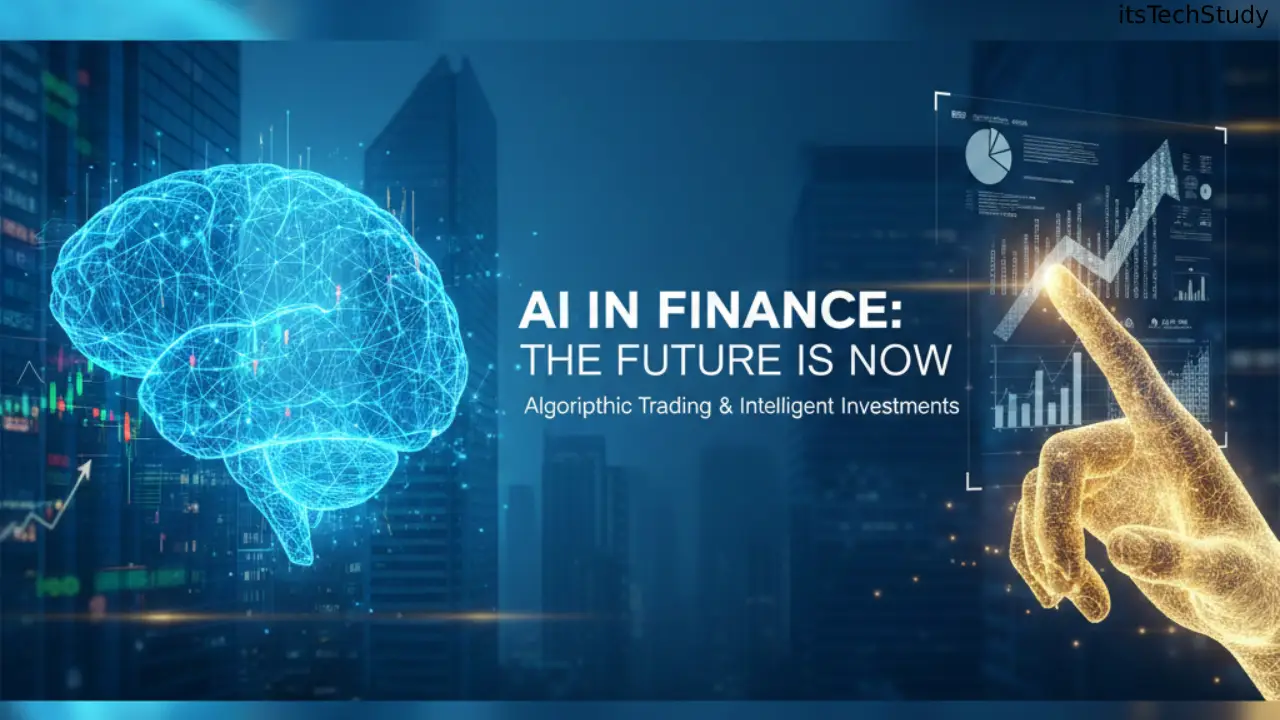
Introduction: Why AI in Finance Is Becoming the Backbone of Modern Money
Over the past decade, technology has rewritten the rules of nearly every industry, but few have been disrupted as dramatically as finance. Traditional banking and financial operations once relied heavily on manual workflows, human intuition, and lengthy approval processes. However, these systems struggled with growing challenges-massive data volumes, real-time risk analysis, rising fraud, shifting customer expectations, and the need for faster, smarter financial decisions.
Today, AI in finance is not just an emerging trend; it has become a pivotal force enabling institutions to operate with greater accuracy, speed, and efficiency. From algorithmic trading and credit scoring to customer service chatbots and automated fraud detection, artificial intelligence is driving a new era where financial intelligence is becoming increasingly digital, predictive, and autonomous.
With advancements in machine learning, natural language processing, predictive analytics, and generative AI, the financial landscape is evolving toward hyper-personalized banking, lightning-fast automated decisions, and enhanced security. But this transformation also brings new challenges-ethical concerns, data privacy risks, complex AI models, and the need for skilled talent capable of building trustworthy systems.
This article takes an in-depth look at how AI is reshaping finance today, the technologies behind its rapid development, real-world applications, benefits, risks, and how businesses can prepare for an AI-driven financial future.
How AI Is Redefining Modern Finance
The Shift from Traditional to Intelligent Financial Systems
For decades, financial firms operated with structured systems that depended on historical data, human expertise, and rigid workflows. But the modern digital economy demands:
- Real-time decision-making
- Faster transaction handling
- Higher accuracy in risk assessment
- Personalized customer experiences
- Smarter fraud detection
- Better operational efficiency
AI bridges these gaps by enabling financial institutions to process massive datasets, analyze patterns instantly, automate repetitive tasks, and generate insights that would take humans weeks or months.
Core Technologies Powering AI in Finance
While “AI” is often used as a catch-all term, several underlying technologies drive its impact:
1. Machine Learning (ML)
ML models learn from historical data to make predictions and decisions. Applications include:
- Credit scoring
- Fraud detection
- Market forecasting
- Automated investment strategies
2. Natural Language Processing (NLP)
NLP helps financial systems understand and process human language. This allows:
- Chatbots in banking apps
- Automated document processing
- Sentiment analysis for market predictions
3. Robotic Process Automation (RPA)
RPA automates repetitive tasks such as:
- Invoice processing
- Compliance checks
- Data entry
When combined with AI, RPA becomes “intelligent automation.”
4. Predictive Analytics
Predictive models anticipate:
- Market trends
- Customer behaviors
- Loan defaults
- Investment risks
5. Generative AI in Finance
Beyond analysis, generative AI creates:
- Personalized financial guidance
- Automated report drafts
- Market scenario simulations
These technologies work together to build smart financial ecosystems capable of learning and improving continuously.
Real-World Applications of AI in Finance
1. AI in Banking
Banks use AI to enhance security, efficiency, and customer experience.
Key Applications:
- Automated customer support using chatbots
- AI-driven loan approvals based on detailed risk analysis
- Fraud detection systems monitoring unusual activity
- Smart KYC & AML verification
Impact
Banks can deliver personalized services, cut operational costs, and improve decision accuracy.
2. AI in Investment and Asset Management
AI empowers traders and investors with data-driven insights.
Applications include:
- Algorithmic trading
- Portfolio optimization
- Predictive analytics for market trends
- Risk-return balancing models
Investment companies now rely on AI to spot opportunities faster than human analysts ever could.
3. AI in Fraud Detection and Cybersecurity
Financial fraud continues to rise in a digital-first world. AI’s pattern-recognition capabilities allow instant detection of:
- Suspicious transactions
- Identity theft
- Phishing attempts
- Account anomalies
AI systems can respond in milliseconds-far quicker than human teams.
4. AI in Credit Scoring and Risk Management
Credit decisions once depended on limited financial history. AI expands the dataset by analyzing:
- Payment patterns
- Spending behaviors
- Social signals
- Alternative data sources
This enables more accurate, inclusive, and fair lending decisions.
5. AI in Insurance (InsurTech)
AI is transforming insurance with:
- Automated claims processing
- Risk prediction
- Customer profiling
- Fraud detection
Insurers can reduce claim times from weeks to minutes.
6. AI-Powered Personal Finance Tools
Consumers now use intelligent apps to:
- Track spending
- Manage budgets
- Get investment suggestions
- Plan savings
AI brings financial literacy to everyone-even those without professional guidance.
Comparison Table: Traditional vs. AI-Driven Financial Systems
| Category | Traditional Finance | AI-Powered Finance |
|---|---|---|
| Decision Speed | Manual and slow | Real-time automated decisions |
| Risk Assessment | Limited data | Multidimensional data analysis |
| Fraud Detection | Reactive | Predictive and proactive |
| Customer Experience | Generic | Personalized and dynamic |
| Scalability | Labor-intensive | Highly scalable automation |
| Operational Cost | Higher | Significantly reduced |
| Accuracy | Human-dependent | Data-driven precision |
Benefits of AI in Finance
Pros
- Faster and more accurate decision-making
- Reduced operational costs
- Enhanced fraud detection and security
- Improved customer experience with personalization
- Higher efficiency through automation
- Better investment predictions and portfolio management
- 24/7 customer support via automated systems
Cons
- High initial implementation costs
- Data privacy and security concerns
- Potential job displacement due to automation
- Complexity of AI model training and maintenance
- Risk of algorithmic bias if data is flawed
How AI Is Changing Financial Customer Experience
AI helps banks and financial services deliver:
1. Personalized Banking
AI analyzes user routines and financial patterns to offer:
- Tailored loan suggestions
- Custom saving plans
- Targeted investment recommendations
2. Smarter Customer Service
Chatbots and virtual assistants respond instantly to questions such as:
- “What’s my balance?”
- “Transfer money to my account.”
- “Show my last 10 transactions.”
3. Proactive Financial Insights
AI alerts users when:
- Spending patterns look risky
- Bills are due
- Investment opportunities arise
4. Seamless Mobile Banking
AI improves:
- App navigation
- Voice-controlled banking
- Fraud alerts
- Instant financial insights
AI in Financial Security and Fraud Prevention
Security is one of the most crucial areas where AI shines. Financial fraud causes billions of dollars in losses globally each year.
AI strengthens security by:
- Monitoring real-time transaction behavior
- Blocking suspicious activity instantly
- Using biometrics (face/voice recognition)
- Enhancing identity verification
AI systems evolve continuously as they learn from new fraud patterns-providing smarter, more resilient protection.
AI in Trading and Market Forecasting
AI has transformed trading desks worldwide.
How AI improves trading:
- Predictive algorithms analyze market behavior
- AI bots execute trades in microseconds
- Portfolio balancing reduces risk exposure
- Sentiment analysis monitors social and news signals
AI-powered trading tools help investors make decisions based on data rather than emotion or guesswork.
Ethical and Regulatory Considerations in AI Finance
With great power comes responsibility. AI in finance raises concerns such as:
1. Data Privacy & Protection
Financial data is highly sensitive; misuse could be damaging.
2. Algorithmic Bias
Models must avoid unfair outcomes in:
- Credit scoring
- Loan approval
- Insurance premiums
3. Transparency & Explainability
AI decisions should be understandable, not “black box” outputs.
4. Compliance with Financial Regulations
As AI evolves, governments introduce strict guidelines for:
- Risk assessment
- Fraud prevention
- Data governance
Institutions must design AI systems that remain compliant, fair, and secure.
Future Trends: What’s Next for AI in Finance?
1. Hyper-Personalized Financial Ecosystems
Every customer will receive a fully customized financial experience.
2. AI-Driven Autonomous Banks
Banks could operate with minimal human intervention.
3. Quantum-AI Finance Models
Quantum computing will boost predictive capabilities exponentially.
4. Voice-First Banking
Users will manage accounts through voice assistants with greater accuracy.
5. Self-Healing Financial Security Networks
AI systems that automatically repair vulnerabilities.
6. AI Advisors for Everyone
AI-driven investment advisors will become mainstream-affordable and accessible to all.
Steps for Businesses to Adopt AI in Finance
- Identify business areas that need AI automation
- Collect and clean high-quality financial data
- Choose the right AI technologies & models
- Integrate AI into existing systems
- Monitor model performance regularly
- Ensure compliance and data security
- Train teams to work with AI tools
Adopting AI is not just a trend-it’s becoming a competitive necessity.
Conclusion
Artificial intelligence is reshaping the financial world with unprecedented speed. From smarter banking and real-time fraud prevention to algorithmic trading and personalized financial insights, AI is pushing the industry toward greater innovation, accuracy, and accessibility. Financial institutions that embrace AI will gain a competitive edge, delivering powerful customer experiences and efficient operations. Those that resist risk falling behind in a rapidly evolving digital economy.
As AI continues to grow-integrating with technologies like quantum computing and blockchain-it will redefine how we save, spend, invest, and secure our financial futures. The transformation is only beginning, and the next generation of finance will be shaped by intelligent systems that make money management smarter, safer, and more inclusive for all.

About the Author
Amelia Morgan is a Editor at itsTechStudy.com with 15+ years of experience in the technology industry. I write about emerging innovations, AI, and digital trends-making complex topics simple and engaging for readers.
FAQs: Frequently Asked Questions About AI in Finance
Q1: How is AI used in the finance industry?
Ans: AI is used for fraud detection, risk assessment, credit scoring, automated trading, personalized banking services, customer support, investment management, and operational automation.
Q2: Is AI safe for financial transactions?
Ans: Yes. AI improves safety by monitoring transaction patterns, detecting fraud, enhancing cybersecurity, and automating threat response. However, strong data protection policies are essential.
Q3: Can AI replace human financial advisors?
Ans: AI can provide fast, data-driven insights, but human advisors remain important for emotional intelligence, complex strategies, and long-term relationship building. The future is hybrid—AI + human advisors.
Q4: How does AI improve customer experience in banking?
Ans: AI offers personalized recommendations, 24/7 chatbot support, faster transaction processing, smarter security features, and spending insights, creating a smoother and more engaging banking experience.
Q5: What are the risks of using AI in finance?
Ans: Risks include algorithmic bias, data security vulnerabilities, high implementation costs, and lack of transparency in complex models. With proper governance, these risks can be minimized.
Q6: Is AI the future of finance?
Ans: Absolutely. AI is driving efficiency, speed, accuracy, personalization, and security-making it a core component of future banking, trading, insurance, and financial services.





No Comments Yet
Be the first to share your thoughts.
Leave a Comment