

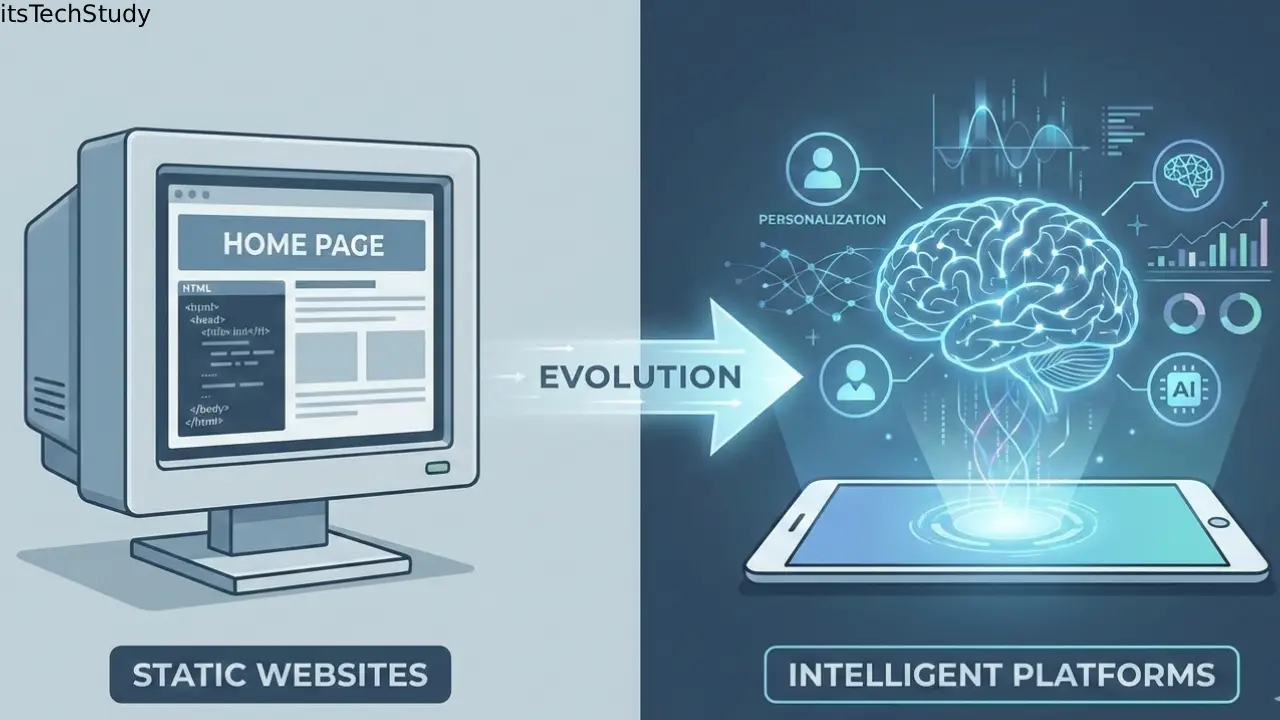
Introduction: The Internet Isn’t What It Used To Be
There was a time when websites were nothing more than digital brochures – static blocks of text, plain images, and maybe some hyperlinks if you were lucky. They didn’t remember you, they didn’t adapt to you, and they certainly didn’t speak to you. In the early 2000s, just getting online felt revolutionary, but as technology accelerated, user expectations evolved faster than the web itself..
Today, we’re in the middle of a massive shift. The rise of artificial intelligence (AI), machine learning, cloud computing, and no-code development has completely redefined how websites function. Businesses now demand platforms that are smart, predictive, interactive, scalable, and capable of learning from user behavior.
The modern web is no longer just a space – it’s a living ecosystem.
This transformation, from static websites to intelligent platforms, isn’t just a technical evolution; it’s a shift in mindset. Organizations that don’t adapt risk falling behind in a world where users expect personalization, automation, and instant response.
This article explores exactly how we got here, what intelligent platforms are made of, and why they matter more now than ever. If you’ve ever wondered how we moved from plain HTML pages to AI-powered customer portals, buckle up – because the story is just getting started.
Understanding the Evolution of Web Technology
What Were Static Websites?
Static websites were the foundation of early web development. Built primarily with HTML, CSS, and eventually JavaScript, they were fixed, non-interactive, and identical for all visitors.
Key Characteristics
- Every user saw the same content
- Changes required manual code updates
- No database connectivity
- No real-time personalization
- Limited interactivity
They were simple, affordable, and easy to host – perfect for the early internet era.
The Rise of Intelligent Platforms
An intelligent platform is a website or web application enhanced with integrative technologies like AI, automation, real-time analytics, and data-driven personalization. Unlike traditional sites, they learn, adapt, and respond to users.
Common examples include:
- E-commerce platforms offering personalized recommendations
- SaaS dashboards that predict business trends
- AI chatbots providing real-time support
- Customer portals with dynamic content based on user history
- Learning platforms that tailor lessons based on performance
These platforms behave more like digital employees than digital brochures.
Key Technologies Powering Intelligent Platforms
| Technology | Purpose in Intelligent Platforms | Example Use Case |
|---|---|---|
| AI & Machine Learning | Decision-making & personalization | Product recommendations |
| Cloud Computing | Scalable performance & global access | AWS, Azure hosted systems |
| APIs & Microservices | Modular integrations | Payment gateways |
| Big Data Analytics | User behavior insights | Conversion tracking |
| No-Code/Low-Code Tools | Faster development cycles | Bubble, Webflow, Glide |
| IoT Connectivity | Real-time device data | Smart home monitoring websites |
Together, these form the backbone of modern web automation.
How Static Sites Compare to Intelligent Platforms
Feature Comparison Table
| Feature Category | Static Websites (Old Era) | Intelligent Platforms (Modern Era) |
|---|---|---|
| Content Delivery | Same for all users | Adaptive & personalized |
| User Interaction | Very limited | Conversational, responsive |
| Data Handling | None or minimal | Data-driven automation |
| Maintenance | Manual updates | Continuous & automated |
| Technology Stack | Basic HTML/CSS | AI, ML, APIs, cloud ecosystems |
| Business Value | Awareness only | Conversion, engagement, retention |
Why the Shift Matters
The transition isn’t just a technical upgrade – it’s a strategic advantage. Modern customers expect:
- Instant responses
- Personalized experiences
- Secure data management
- Cross-device compatibility
- Faster performance
- Predictive services
If your website still behaves like a digital flyer, users will move to competitors offering dynamic experiences.
Pros & Cons Breakdown
Static Websites
Pros
- Affordable to build
- Great for low-maintenance needs
- Faster initial loading speed
- No complex backend required
Cons
- No personalization
- Limited business capabilities
- Not scalable for modern needs
- Hard to integrate with advanced tools
Intelligent Platforms
Pros
- Personalized experiences boost engagement
- Automation reduces manual workload
- Scalable with business growth
- Easier integration with third-party services
- Better analytics for decision-making
Cons
- Higher development cost
- Requires ongoing updates
- Needs cybersecurity and compliance focus
- Skill requirements can be higher
Core Components of an Intelligent Platform
1. AI-Powered Personalization
- Learns from user interactions
- Suggests relevant products, content, or solutions
2. Real-Time Data Processing
- Live dashboards
- User behavior tracking
- Instant decision-making
3. Automated Workflows
- Form-driven email responses
- Automated onboarding processes
- Self-service customer support
4. API Integrations
- Payment gateways
- CRM and ERP connectivity
- Social login systems
5. Cloud Infrastructure
- Global uptime
- Load balancing
- Security and data backups
Use Cases Where Intelligent Platforms Shine
E-commerce (Smart Stores)
- Personalized pricing based on demand
- Chatbots offering size recommendations
- AI-powered product matching
Healthcare Portals
- Patient records stored securely
- Appointment suggestion based on past visits
- Symptom-checking AI assistants
Learning Management Systems
- Adaptive difficulty levels
- Progress dashboards
- Real-time virtual tutors
Banking & FinTech
- Automated fraud detection
- Predictive spending insights
- AI risk assessments
Tips for Transitioning to an Intelligent Platform
Before making the leap, plan with clarity:
- Define business goals
e.g., Reduce customer service load by 40% with automation - Review integration needs
List essential tools: CRM, email marketing, payment systems - Choose a scalable tech stack
- Start with a minimum viable product (MVP)
- Focus on cybersecurity and compliance
- Train your team for digital adoption
The Future: Hyper-Intelligent Digital Ecosystems
We’re quickly moving beyond intelligent platforms. The next stage includes:
- Fully autonomous web applications
- Voice-driven website navigation
- Predictive UX (content arranged based on user intent)
- AI agents handling real-time operations
The websites of tomorrow won’t just react – they’ll anticipate.
Conclusion
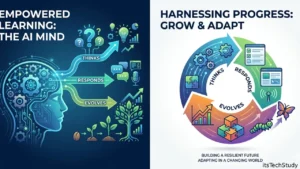
The journey from static websites to intelligent platforms reflects more than just technological growth – it represents a shift in how we value user interaction, business automation, and data intelligence. Today, success isn’t defined by who has a website, but by who has a platform that thinks, responds, and evolves.
Businesses that adopt intelligent platforms unlock:
- Higher engagement
- Better customer loyalty
- Automated operations
- Scalable digital futures
The message is clear:
The web has changed – and it’s time we changed with it.

About the Author
Tobias Hale is a technology writer and software analyst with a sharp eye on the ever-evolving world of digital innovation. With a deep passion for clean code, secure systems, and emerging technologies, Tobias brings clarity to complex topics - from the latest in operating system updates to cutting-edge software security practices.
Frequently Asked Questions (FAQ)
Q1: Are intelligent platforms suitable for small businesses?
Ans: Absolutely. With affordable cloud tools and no-code platforms, even small businesses can adopt automation and personalization without heavy budgets.
Q2: Do intelligent platforms require advanced coding knowledge?
Ans: Not always. While advanced builds need development expertise, many AI and automation features can be implemented using no-code solutions like Webflow or Zapier.
Q3: Will AI replace traditional websites entirely?
Ans: Not replace - evolve. Static websites will still exist for simple needs, but data-driven, intelligent systems will dominate in competitive industries.
Q4: Are intelligent platforms secure?
Ans: They can be, provided developers implement encryption, access controls, and compliance frameworks like GDPR or ISO standards.
Q5: How long does transformation usually take?
Ans: Depending on complexity, transitioning from static to intelligent systems can take 2 to 12 months, including testing and integration.


No Comments Yet
Be the first to share your thoughts.
Leave a Comment