

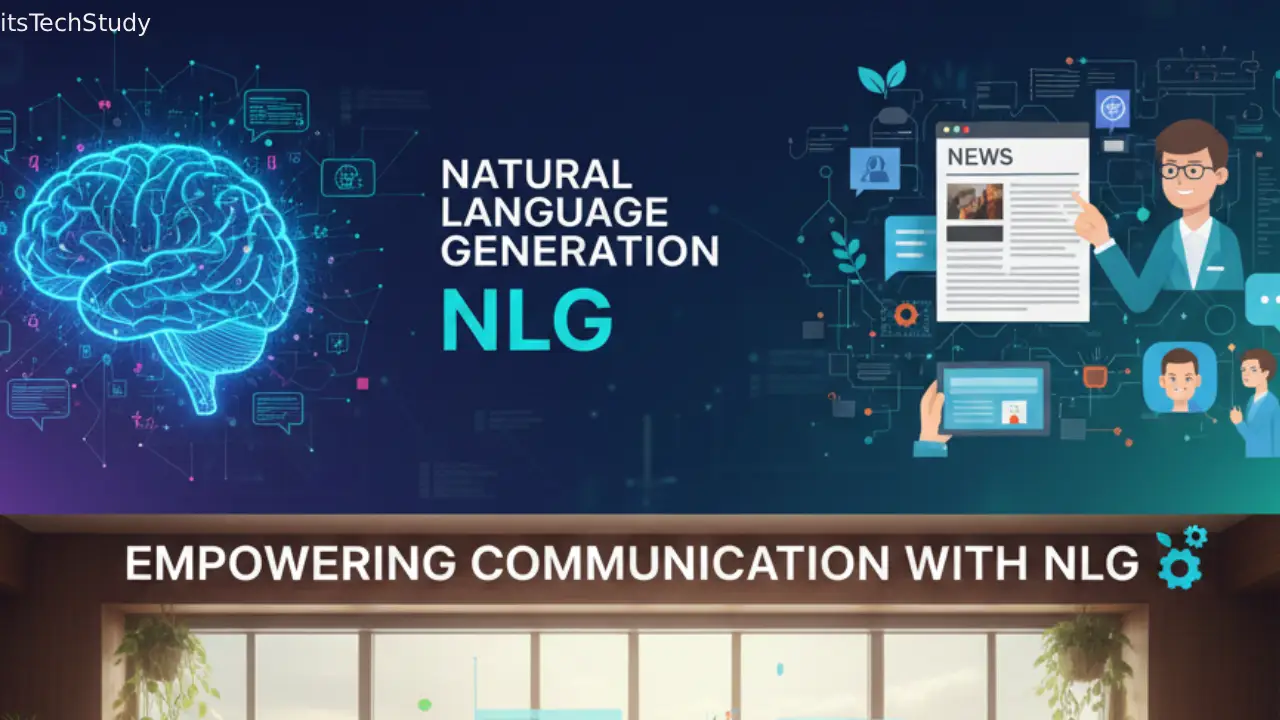
Introduction: From Data Overload to Meaningful Words
Over the last decade, technology has solved one big problem and quietly created another. We now generate massive amounts of data every second-logs, analytics, reports, sensor readings, customer feedback-but making sense of it all remains a challenge. Raw data alone doesn’t help businesses or individuals make decisions. What people actually need is clear, human-readable language.
This is where Natural Language Generation (NLG) enters the picture. As a crucial branch of artificial intelligence and natural language processing (NLP), NLG focuses on transforming structured data into meaningful narratives. Instead of dashboards filled with numbers, NLG produces explanations, summaries, and insights that people can instantly understand..
Today, NLG is no longer a futuristic concept. It’s already shaping how reports are written, how chatbots respond, how product descriptions are created, and how insights are communicated at scale. As demand for speed, personalization, and accuracy grows, NLG is becoming a foundational technology across industries.
What Is Natural Language Generation (NLG)?
Natural Language Generation is a subfield of artificial intelligence that enables machines to automatically produce human-like text from data. In simple terms, NLG teaches computers how to “write.”
How NLG Works Behind the Scenes
At a high level, NLG systems follow a structured process:
- Data Analysis – Interpreting structured or semi-structured data
- Content Planning – Deciding what information is important
- Sentence Planning – Organizing ideas into logical sentences
- Text Realization – Converting plans into fluent natural language
Modern NLG systems often rely on machine learning, deep learning, and advanced language models, allowing them to adapt tone, style, and complexity based on context.
NLG vs NLP vs NLU: Understanding the Differences
Many people confuse NLG with other language technologies. While related, each serves a different purpose.
| Technology | Primary Function | Example Use Case |
|---|---|---|
| NLP (Natural Language Processing) | Overall language understanding & processing | Text classification |
| NLU (Natural Language Understanding) | Interpreting meaning from text | Intent detection |
| NLG (Natural Language Generation) | Producing human-like text | Automated reports |
In short, NLU understands, while NLG creates.
Key Applications of Natural Language Generation
NLG is already embedded in many tools we use daily, often without us noticing.
Common Use Cases of NLG
- Automated business reports from analytics data
- AI content generation for product descriptions
- Chatbots and virtual assistants
- Personalized emails and notifications
- Financial summaries and forecasts
Industries Benefiting from NLG
- Healthcare – Patient summaries and clinical documentation
- Finance – Risk reports and investment insights
- E-commerce – Product descriptions at scale
- Marketing – Personalized content creation
- Manufacturing – Operational performance reporting
Benefits of Natural Language Generation
NLG offers practical advantages that go beyond automation.
Key Advantages of NLG
- Converts complex data into easy-to-read narratives
- Saves time and operational costs
- Delivers consistent tone and messaging
- Scales content creation effortlessly
- Enables real-time insights
Pros and Cons of Natural Language Generation
Pros
- High scalability for content creation
- Faster decision-making with readable insights
- Reduces manual reporting effort
- Customizable tone and structure
Cons
- Requires high-quality input data
- Can lack deep human creativity
- Initial setup may be complex
- Needs regular monitoring for accuracy
Challenges and Limitations of NLG
Despite its strengths, NLG is not without challenges. One of the biggest hurdles is ensuring contextual accuracy. Machines can generate fluent text, but subtle nuances, emotional depth, or domain-specific judgment still require careful tuning.
Another challenge is bias in training data. If underlying datasets are incomplete or skewed, the generated output can reflect those flaws. This makes responsible implementation and continuous validation essential.
How NLG Is Shaping the Future of Content Creation
As AI models evolve, NLG is moving beyond rigid templates toward more adaptive, conversational output. Future systems will likely:
- Generate highly personalized content in real time
- Adapt tone dynamically based on user intent
- Integrate seamlessly with analytics platforms
- Assist human writers rather than replace them
Rather than eliminating human creativity, NLG is becoming a powerful collaborative tool, handling repetitive tasks so people can focus on strategy and originality.
Conclusion: Why NLG Matters More Than Ever
Natural Language Generation is transforming how humans interact with data. By turning numbers into narratives, NLG bridges the gap between technical systems and human understanding. As data volumes continue to grow, the ability to explain insights clearly and instantly will be a competitive advantage.
For businesses, developers, and content creators alike, understanding and leveraging NLG is no longer optional-it’s a step toward smarter, faster, and more human-centered technology.

About the Author
Tobias Hale is a technology writer and software analyst with a sharp eye on the ever-evolving world of digital innovation. With a deep passion for clean code, secure systems, and emerging technologies, Tobias brings clarity to complex topics - from the latest in operating system updates to cutting-edge software security practices.
Frequently Asked Questions (FAQ)
Q1: Is Natural Language Generation the same as AI writing?
Ans: Not exactly. AI writing is a broad term, while NLG specifically focuses on generating text from structured data using defined linguistic processes.
Q2: Can NLG completely replace human writers?
Ans: No. NLG excels at speed and scale, but human writers are still essential for creativity, emotional nuance, and strategic storytelling.
Q3: Is NLG suitable for small businesses?
Ans: Yes. Many modern NLG tools are affordable and scalable, making them accessible even for startups and small teams.
Q4: How accurate is NLG-generated content?
Ans: Accuracy depends on the quality of input data and system design. With clean data and proper rules, NLG output can be highly reliable.
Q5: Does NLG help with SEO?
Ans: Absolutely. NLG can generate structured, keyword-optimized content efficiently, supporting SEO strategies when used thoughtfully.




No Comments Yet
Be the first to share your thoughts.
Leave a Comment