

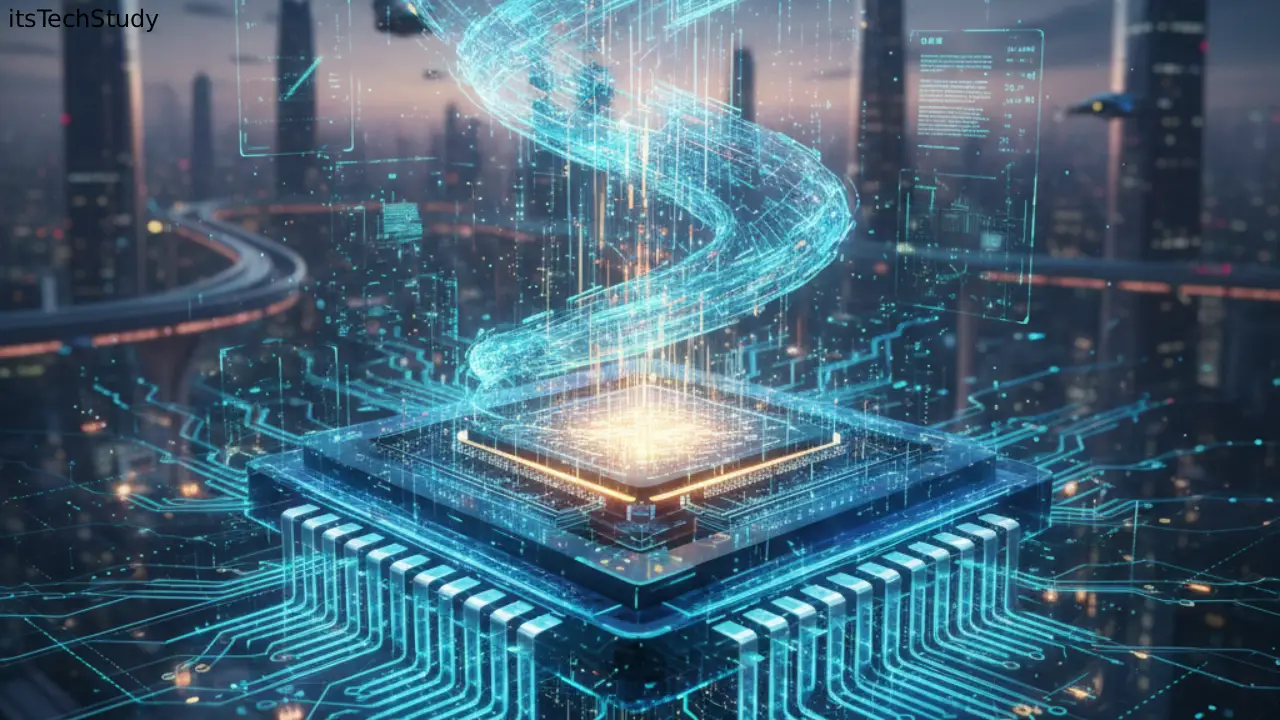
Introduction: The Race Toward Smarter, Faster, and More Efficient Chipsets
In the last decade, the technology industry has witnessed one of its fastest evolutions-an era defined by unprecedented computing power, artificial intelligence, and ultra-efficient devices. But behind every leap in digital capability lies one core driving force: next-generation chipsets.
Once, processor upgrades were predictable-more cores, slightly higher clock speeds, and incremental efficiency gains. But things have changed dramatically. Today’s tech landscape demands processors that can handle:
- Real-time AI computations
- 5G and soon 6G connectivity
- Ultra-high-resolution imaging
- Advanced gaming and graphics
- Battery-efficient performance
- Secure on-device processing
Modern devices-from smartphones and laptops to electric vehicles, IoT appliances, smart homes, and robotics-rely heavily on high-performance chipsets that balance speed, intelligence, and energy optimization.
This rapid rise in performance needs has pushed companies like Qualcomm, Apple, AMD, Intel, Samsung, and MediaTek to reinvent how chipsets are built. Instead of simply increasing CPU speed, manufacturers are integrating AI engines, neural processing units (NPUs), custom GPUs, specialized accelerators, and advanced lithography nodes (like 3nm and 2nm).
As we step into a new era powered by AI everywhere, mixed-reality experiences, autonomous machines, and hyper-connectivity, next-generation chipsets are becoming the technological backbone shaping our future.
This article explores how next-gen processors work, why they matter, where technology is heading, and what consumers, developers, and tech businesses should expect in the coming years.
What Are Next-Generation Chipsets?
Next-generation chipsets refer to the latest and most advanced processor designs built using cutting-edge semiconductor technology. These processors use improved architecture, smaller nanometer processes, smarter AI accelerators, and advanced power management to deliver significantly higher performance compared to older generations.
Key Advancements Defining Next-Generation Chipsets
- Smaller Nanometer Processes
Moving from 7nm – 5nm – 3nm – 2nm allows more transistors in smaller space, improving speed and energy efficiency. - AI-Powered Architecture
Neural engines and NPUs enable real-time AI tasks like speech recognition, image processing, and predictive analysis. - Improved GPU Capabilities
Designed for mobile gaming, VR/AR, rendering, and machine learning acceleration. - Enhanced Connectivity
Support for 5G/6G, Wi-Fi 7, Bluetooth LE, and edge computing. - Security and Privacy Enhancements
On-device data processing is more secure and prevents unnecessary cloud dependency.
Why Next-Generation Chipsets Matter More Than Ever
Technology today is defined by multi-tasking, real-time computation, and low latency performance. Whether you’re streaming, gaming, editing, or running AI-powered tools, your chipset determines how smooth the experience is.
Here’s why they are crucial:
For Smartphones
- Faster app loading
- Better AI camera enhancements
- More efficient battery management
- Console-level gaming
For Laptops
- Higher productivity
- Faster video rendering
- AI-powered software improvements
For IoT & Smart Homes
- Faster response times
- Improved energy efficiency
- Better integration with cloud/edge networks
For AR/VR and Mixed Reality
- Immersive graphics
- Low latency
- Real-time spatial mapping
For Electric Vehicles & Robotics
- Enhanced sensor fusion
- Real-time decision-making
- Improved safety features
Without next-generation chips, none of the innovations we expect from the future-AI assistants, autonomous systems, hyperconnected devices-would be possible.
Core Components of Next-Generation Chipsets
1. Advanced CPUs
Modern chipsets use hybrid architectures like:
- Performance cores (P-cores) for heavy tasks
- Efficiency cores (E-cores) for background processing
This boosts overall performance while saving battery life.
2. AI Engines / NPUs
NPUs handle neural computations faster than CPUs or GPUs.
They power:
- Face ID
- Live translation
- Real-time AI enhancements
- Smart photography
3. GPUs Built for the Future
Next-gen GPUs support:
- Ray tracing
- HDR rendering
- High FPS gaming
- AI-assisted graphics
4. Image Signal Processors (ISPs)
ISPs are responsible for:
- Clearer images
- Better low-light performance
- Sharper videos
5. Connectivity Modules
Built-in modems now support:
- 5G mmWave
- 5G sub-6 GHz
- Wi-Fi 7
- 6G ready infrastructure
Table: Comparison of Key Features in Next-Generation Chipsets
| Feature | Old Generation Chipsets | Next-Generation Chipsets |
|---|---|---|
| Manufacturing Process | 10nm / 7nm | 5nm / 3nm / 2nm |
| AI/ML Capabilities | Limited | Dedicated NPUs with trillions of operations |
| Connectivity | 4G, Wi-Fi 5/6 | 5G/6G, Wi-Fi 7 |
| Power Efficiency | Moderate | Highly optimized with hybrid cores |
| GPU Performance | Basic rendering | Ray tracing, AR/VR-ready GPUs |
| Security | Software-based | Hardware-level neural security |
| Battery Efficiency | Average | Up to 40% better efficiency |
Benefits of Next-Generation Chipsets
Pros
- Massively improved performance across apps and games
- Higher AI computing capability for advanced tasks
- Better energy efficiency and longer battery life
- Enhanced mobile photography and videography
- Support for next-gen wireless connectivity
- More secure and reliable processing
- Better multitasking and thermal management
Cons
- Higher manufacturing cost
- Devices become more expensive
- Rapid tech evolution can make older devices obsolete faster
- Requires optimized software to maximize performance
How Next-Generation Chipsets Improve Mobile Photography
Smartphone cameras are no longer limited by lens hardware. With modern ISPs, computational photography drives the results.
Improvements Enabled by New Chipsets
- AI-powered night mode
- 8K and 4K HDR video
- Real-time image sharpening
- Ultra-fast autofocus
- Photo noise reduction
This is why even mid-range phones today produce professional-level images.
Next-Generation Chipsets and AI Integration
AI is the biggest driving force behind next-gen processors.
Here’s how they integrate it now:
1. On-Device AI Processing
AI tasks no longer depend on servers — making processing faster and more secure.
2. Predictive Intelligence
Chipsets learn user behavior to optimize power usage and app performance.
3. AI for Gaming and Graphics
AI accelerates rendering, improves textures, and enhances animations.
4. Language Processing and Translation
Real-time translation becomes far more accurate with NPUs.
Applications of Next-Generation Chipsets
1. Smartphones and Tablets
- Better display optimization
- Smoother UI interactions
- Advanced gaming
2. Laptops and PCs
- Boosted AI capabilities
- Faster boot times
- Enhanced thermal efficiency
3. Autonomous Cars
- Collision detection
- Sensor fusion
- Lane assistance
4. Robotics and Automation
- Autonomous decision-making
- Object recognition
- Navigation enhancements
5. Smart Home Devices
- Rapid voice recognition
- Low-power standby performance
How Chip Manufacturing Is Changing (3nm – 2nm – Beyond)
Semiconductor manufacturing is the heart of next-gen chipsets.
The smaller the nanometer process, the more transistors can fit on a chip.
Why smaller nodes matter
- Lower power consumption
- Less heat generation
- Faster performance
The industry is moving from 3nm to 2nm, and soon 1.4nm nodes, unlocking even more powerful processors.
Future Trends in Next-Generation Chipsets
1. Chiplets and Modular Architectures
Instead of one large chip, processors will be made from smaller interconnected chiplets.
2. Quantum-Enhanced Processing
Hybrid systems may incorporate quantum accelerators.
3. AI-Dominant Architectures
AI cores may become the primary processing unit, surpassing CPUs in importance.
4. Photonic Processors
Chips using light instead of electricity for ultra-fast speeds.
5. Energy-Harvesting Chips
Future IoT devices may run on ambient energy instead of batteries.
Practical Tips for Buyers Choosing Devices with Next-Gen Chipsets
- Check the manufacturing process (5nm, 3nm)
Smaller usually means faster and more efficient. - Look for AI engine or NPU specs
Crucial for future apps and features. - Consider GPU power
Important for gaming, video editing, and AR apps. - Evaluate connectivity options
Ensure the device supports 5G, Wi-Fi 6/7, and Bluetooth LE. - Check thermal performance
Better cooling means long-term reliability.
Conclusion
Next-generation chipsets are redefining what technology can achieve. As devices become smarter, faster, and more connected, processors must evolve to meet new demands. Whether it’s handling AI tasks, running high-end games, improving battery life, or enabling smarter cameras, these advanced chipsets are shaping the future of digital innovation.
As semiconductor companies push boundaries with 2nm and beyond, we can expect even more breakthroughs in performance, efficiency, and intelligence. For consumers, this means better devices, longer-lasting performance, and a truly interconnected digital ecosystem.

About the Author
Tobias Hale is a technology writer and software analyst with a sharp eye on the ever-evolving world of digital innovation. With a deep passion for clean code, secure systems, and emerging technologies, Tobias brings clarity to complex topics - from the latest in operating system updates to cutting-edge software security practices.
FAQ Section
Q1: What makes next-generation chipsets better than older ones?
Ans: They use advanced manufacturing processes, more powerful AI engines, higher efficiency cores, and improved GPUs that deliver significantly faster performance and lower energy consumption.
Q2: Are next-generation chipsets only for expensive devices?
Ans: No. While flagship devices adopt them first, mid-range phones and laptops eventually integrate slightly scaled-down versions within a year.
Q3: How important is the NPU in modern chipsets?
Ans: Extremely important. NPUs handle AI tasks like image processing, translation, face detection, and predictive performance optimization much faster than CPUs or GPUs.
Q4: Does a smaller nanometer chipset make a big difference?
Ans: Yes. Smaller nanometer processes reduce power consumption, improve performance, and allow manufacturers to add more complex components.
Q5: Do next-generation chipsets improve gaming?
Ans: Absolutely. Modern GPUs and AI-driven frame enhancement deliver smoother gameplay, higher FPS, ray tracing, and lower heat generation.
Q6: Will next-generation chipsets support future 6G networks?
Ans: Some upcoming chipsets are expected to be 6G-ready, ensuring compatibility with future connectivity standards.




No Comments Yet
Be the first to share your thoughts.
Leave a Comment