

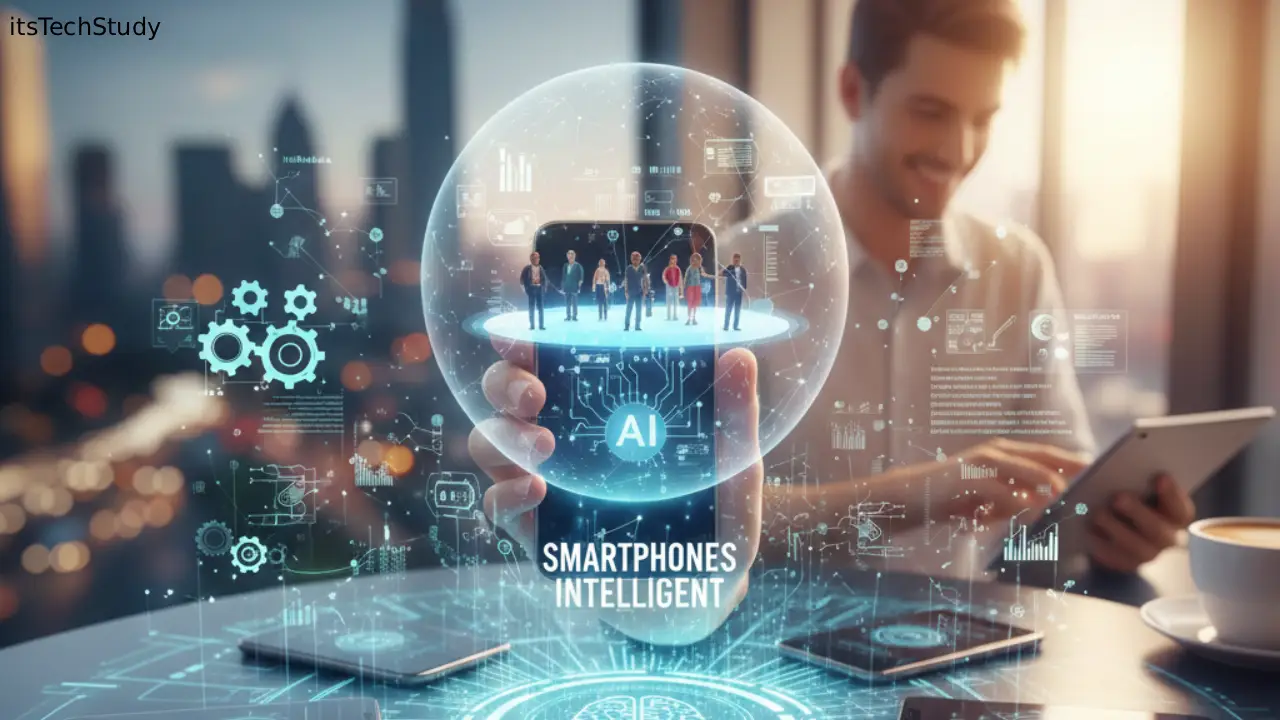
Introduction: Why Smartphones Are Becoming Truly Intelligent
For more than a decade, smartphones have been at the center of our digital world. Yet, despite their power, most of their features historically depended on user input-typing a command, tapping an icon, searching manually, or switching between apps. Today, we stand at a turning point where smartphones are no longer just tools; they are evolving into intelligent companions capable of learning from our behaviors, predicting our needs, and making decisions that streamline everyday life.
This shift isn’t happening because devices suddenly became more complex-it’s happening because technology around them has matured. AI is no longer limited to voice assistants giving us weather updates. Machine learning now powers everything from battery optimization to advanced photography, while on-device neural engines enable processing that was impossible just a few years ago..
However, with this progress comes a new set of challenges: privacy concerns, data management, increased hardware demands, and user expectations for “smarter” actions that genuinely solve real-world problems. The tension between innovation and responsibility is pushing smartphone manufacturers to rethink what “intelligent” truly means.
In this article, we explore how smartphones are becoming more intelligent, the technologies enabling this transformation, the benefits and drawbacks, and what the near future might look like for the next generation of mobile intelligence.
How AI is Transforming Smartphones Into Intelligent Devices
1. On-Device AI: The Brain Behind Modern Smartphone Intelligence
Smartphone intelligence largely stems from AI processing happening locally on the device rather than entirely in the cloud. This means faster decision-making, improved privacy, and a smoother user experience.
Key Advancements Enabling Intelligent Smartphones
- Neural Processing Units (NPUs) built into chipsets
- Adaptive machine learning algorithms
- Predictive suggestions based on behavior patterns
- Natural language processing for more accurate voice commands
- On-device image recognition for photography and accessibility
These breakthroughs allow tasks like real-time translation, noise reduction, and photo enhancement to happen instantly, even offline.
Adaptive User Experience: Learning How You Use Your Phone
2. Personalized Interfaces and Predictive Tools
Intelligent smartphones don’t just store data-they interpret it. Every swipe, tap, app usage pattern, and preference helps build a profile that tailors the device to individual users.
Examples of Adaptive UX
- Apps you frequently use appear first during specific times
- Smart battery algorithms limit background usage
- Adaptive brightness learns preferred lighting
- Predictive text improves with every conversation
- Smart launchers auto-organize apps based on habits
These features allow devices to act less like static machines and more like personalized assistants.
Intelligent Photography: The Rise of Computational Imaging
3. Cameras Powered by AI and Computational Intelligence
Photography is where smartphone intelligence shines most. Algorithms now play a greater role than hardware in creating stunning photos.
How AI Enhances Mobile Photography
- Scene detection (food, portraits, night mode, landmarks)
- Automatic exposure and color adjustments
- Real-time stabilization
- Background segmentation for portrait mode
- AI-driven noise reduction
- Super-resolution zoom using computational merging
Table: Traditional vs Intelligent Smartphone Cameras
| Feature | Traditional Camera | Intelligent AI Camera |
|---|---|---|
| Scene Detection | Manual settings | Auto-detects scene types |
| Low-Light Images | Grainy, noisy | Multi-frame noise reduction |
| Zoom | Optical only | Hybrid AI-enhanced zoom |
| Portrait Effects | Limited | Bokeh powered by depth AI |
| Image Processing | Single shot | Multi-frame computational merging |
The result? Even mid-range phones now capture images previously possible only on professional cameras.
Voice Intelligence: Smartphones That Truly Understand Us
4. Smarter Voice Assistants and Natural Language Models
Voice assistants have evolved from basic command responders to highly capable digital helpers capable of understanding natural language and context.
Modern Capabilities of Intelligent Voice Systems
- Multilingual real-time translation
- Context-aware responses
- Voice-based app control
- Hands-free device navigation
- AI-generated summaries and reminders
As natural language models become more advanced, voice assistants will integrate deeper into operating systems, helping users manage tasks with minimal manual input.
Security Intelligence: Smarter Ways to Protect User Data
5. Intelligent Threat Detection and Predictive Security
Security remains one of the biggest priorities for smartphone makers. Intelligent smartphones now use AI to guard users against evolving threats.
AI Security Innovations
- Predictive malware detection
- Behavioral authentication (how you type, swipe, move)
- Adaptive face unlock
- On-device encryption and secure enclaves
- Spam and phishing message filtering
By proactively identifying risks instead of waiting for attacks, smartphones are becoming safer and more trustworthy.
Battery, Performance, and System Intelligence
6. AI Optimizing the Core of Device Performance
Behind the scenes, AI is constantly managing resource allocation to ensure smoother performance.
System-Level Intelligence Includes:
- CPU/GPU scaling based on usage
- Smart charging to protect battery health
- Adaptive refresh rate adjustments
- Intelligent RAM allocation
- Heat management using predictive models
These enhancements extend device lifespan and improve everyday usability.
The Role of Connectivity in Smartphone Intelligence
7. Smarter 5G Utilization and Edge Computing
High-speed networks have unlocked new levels of intelligence in smartphones.
Benefits of Intelligent Connectivity
- Real-time cloud processing
- Faster app loading
- Seamless video streaming
- Low latency for gaming
- Enhanced AR/VR experiences
Combined with edge computing, devices now offload heavy tasks to nearby servers for faster results without relying entirely on centralized clouds.
Pros and Cons of Intelligent Smartphones
Pros
- Significantly improved personalization
- Faster device performance
- Enhanced photography and video quality
- Better battery life through adaptive optimization
- Advanced accessibility features
- Hands-free functionality for multitasking
- Stronger security measures
Cons
- Higher device cost due to integrated AI hardware
- Increased storage consumption
- Initial learning curve for some features
- Potential dependence on AI suggestions
- Concerns about data usage and privacy
8. Real-World Use Cases: Where Smartphone Intelligence Is Making an Impact
Daily Life Improvements
- Smart reminders based on location
- Automatically curated photo albums
- Noise cancellation during calls
- Personalized fitness and health tracking
- Smart home device integration
Professional Uses
- Real-time transcription
- Mobile productivity enhancements
- AI-assisted note-taking
- Business communication optimization
Creative Applications
- Video stabilization for creators
- AI-driven editing tools
- Intelligent layout and story suggestions
9. What Makes a Smartphone Truly Intelligent?
A truly intelligent smartphone goes beyond specifications and features. It must:
- Learn from the user
- Predict needs accurately
- Respond in real time
- Process information securely
- Improve over time through updates
This transformation marks the evolution from phones as communication tools to intelligent digital companions.
10. The Future of Intelligent Smartphones: What’s Next?
The next generation of intelligent smartphones will focus on deeper contextual understanding and seamless automation.
Future Predictions
- AI avatars replacing traditional assistants
- Full-device voice operation without tapping
- Health monitoring through advanced sensors
- Emotion recognition for human-like responses
- Holographic displays powered by AI rendering
- Advanced multimodal AI boosting creativity and productivity
Conclusion
Smartphones are no longer just communication tools-they are intelligent digital companions capable of learning, adapting, and evolving with us. From enhanced photography and smarter security to predictive tools and personalized interfaces, the rise of intelligent smartphones is reshaping how we interact with technology. As AI continues to advance, these devices will become even more intuitive, capable, and deeply integrated into everyday life. The future holds an era where smartphones understand context, anticipate needs, and respond instantly-making technology feel more human than ever.

About the Author
Amelia Morgan is a Editor at itsTechStudy.com with 15+ years of experience in the technology industry. I write about emerging innovations, AI, and digital trends-making complex topics simple and engaging for readers.
FAQ: Smartphones Intelligent
Q1: What makes a smartphone intelligent?
Ans: An intelligent smartphone uses AI, machine learning, and behavioral understanding to anticipate user needs, optimize performance, and deliver personalized experiences without requiring constant manual input.
Q2: Do intelligent features drain battery faster?
Ans: Not necessarily. Modern AI systems are designed to optimize battery usage by learning usage patterns and managing background activities more efficiently.
Q3: Are intelligent smartphones safe for privacy?
Ans: Yes, most leading devices use on-device AI, meaning data stays local. With secure enclaves, encryption, and updated privacy policies, users retain control over their information.
Q4: Why are intelligent smartphones becoming more popular?
Ans: Consumers want devices that simplify life, automate repetitive tasks, and provide high-level functionality without complexity—intelligent smartphones deliver exactly that.
Q5: Do all modern smartphones have intelligent features?
Ans: Most mid-range and flagship devices include at least some intelligent features such as AI cameras, battery optimization, and adaptive interfaces.
Q6: What is the future of smartphone intelligence?
Ans: Future devices will offer deeper contextual awareness, predictive automation, enhanced multimodal AI, and powerful real-time processing capabilities





No Comments Yet
Be the first to share your thoughts.
Leave a Comment