

Introduction: Why Speech Recognition Technology Matters More Than Ever
Over the past decade, technology has rapidly shifted toward more natural, intuitive, and hands-free interaction. From early computers that relied entirely on keyboards to today’s voice-enabled assistants like Siri, Google Assistant, and Alexa, we’ve witnessed a massive transformation in how humans communicate with machines. But this shift didn’t happen overnight – it evolved through decades of innovation in speech recognition technology, a field that continues to accelerate faster than ever.
Today, speech recognition is everywhere. It powers smart homes, helps doctors transcribe patient notes, enables customer service chatbots, assists individuals with disabilities, and streamlines daily tasks with simple voice commands. Yet despite its growing presence, the technology still faces big challenges – accents, background noise, real-time accuracy, and contextual understanding remain major hurdles.
As we move deeper into an AI-driven future, speech recognition isn’t just a convenience – it’s becoming a necessity. With remote work, accessibility demands, and the expansion of IoT (Internet of Things), the ability to interact through voice is reshaping how we live, work, and communicate.
This comprehensive guide breaks down everything you need to know about speech recognition technology: how it works, its benefits and limitations, real-world applications, and the future innovations shaping the next generation of voice-driven tech.


What Is Speech Recognition Technology?
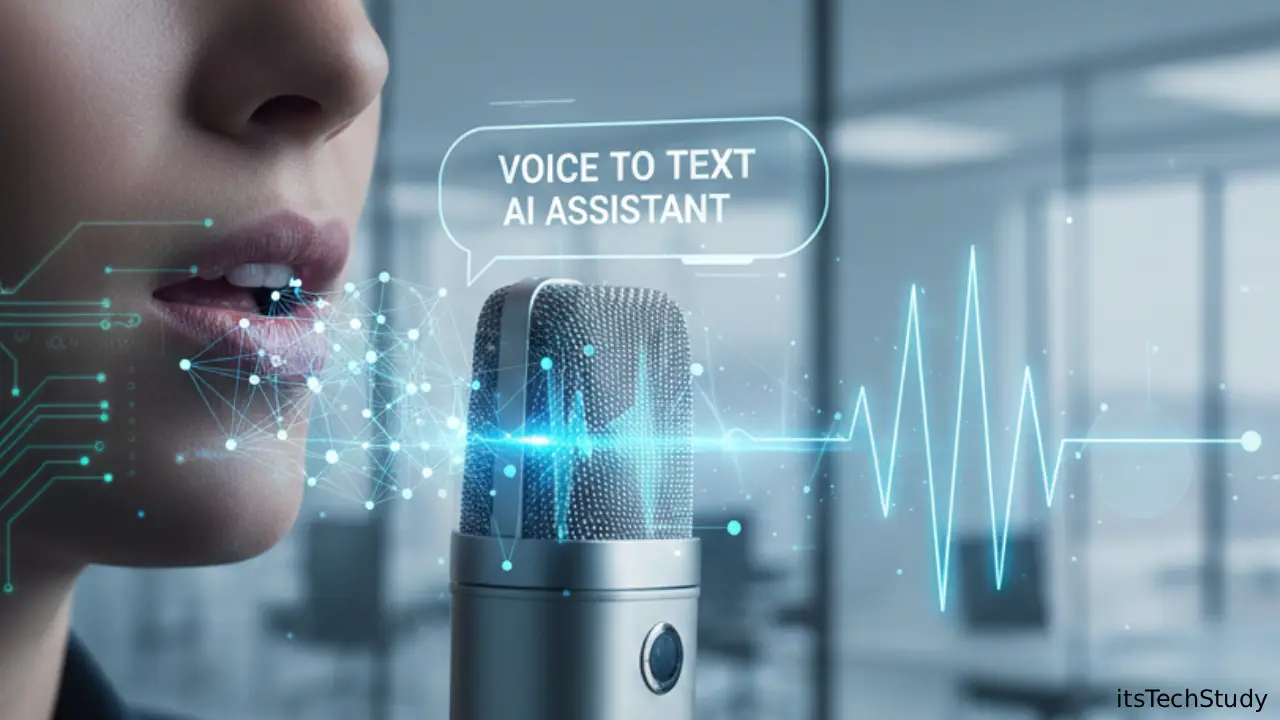
Speech recognition technology refers to systems that enable computers to understand, interpret, and convert human speech into text or commands. At its core, it allows machines to “listen” and respond to spoken language – making interactions faster, more natural, and more accessible.
Also known as automatic speech recognition (ASR) or voice recognition, this technology uses advanced algorithms, machine learning models, and neural networks to process sound waves and convert them into actionable output.
How Speech Recognition Technology Works
Understanding how speech recognition works requires breaking down the multi-step process machines follow to understand human speech.
1. Audio Input Capture
The system begins by capturing speech through a microphone or recording device. This raw audio is typically filled with real-world noise – background chatter, airflow, ambient sounds, etc.
2. Preprocessing and Noise Reduction
Algorithms filter out unnecessary noise, adjust sound quality, and segment spoken words.
3. Feature Extraction
Key sound features such as pitch, frequency, and energy patterns are extracted and processed into numerical representations.
4. Acoustic Modeling
Deep learning models analyze the extracted features to predict phonemes – the smallest units of sound in language.
5. Language Modeling
The system determines the most probable word combinations based on grammar, context, and vocabulary.
6. Final Output
The spoken input is converted into text or executed as a command (“Play music,” “Send message,” “Turn on the lights,” etc.).
Types of Speech Recognition Technology


1. Speaker-Dependent Systems
These systems require training with the user’s voice, making them more accurate for that individual.
Used in: dictation software, personal devices.
2. Speaker-Independent Systems
Designed to understand voices from any user without training.
Used in: smart assistants, call centers, public interfaces.
3. Continuous Speech Recognition
Allows users to speak naturally without pausing between words.
4. Isolated Word Recognition
Requires users to speak one word at a time; often used in industrial or command environments.
5. Natural Language Processing (NLP)-Driven Recognition
Uses deep learning and contextual understanding to interpret intent, not just words.
Applications of Speech Recognition Technology
Speech recognition is widely used across industries, enhancing productivity, accessibility, and user experience.
1. Smart Assistants
Voice assistants like Google Assistant, Siri, Cortana, and Alexa rely entirely on speech recognition.
2. Healthcare
Doctors use voice dictation to document patient notes, reducing administrative tasks.
3. Customer Service & Call Centers
AI-powered systems handle queries, reducing wait times and improving customer support.
4. Automotive Industry
Voice-enabled controls allow drivers to navigate, call, or play music hands-free.
5. Education and Online Learning
Speech-to-text tools support note-taking and accessibility for students with learning disabilities.
6. Smart Home Automation
Users control lighting, appliances, security systems, and thermostats through voice commands.
7. Accessibility for People with Disabilities
Provides independence for users with mobility, vision, or motor impairments.
Key Advantages of Speech Recognition Technology
Pros
- Hands-free convenience improves safety and productivity.
- Faster input compared to typing for many tasks.
- Highly accessible for individuals with disabilities.
- Integrates seamlessly with AI and IoT systems.
- Improves customer support through automated voice systems.
- Reduces manual documentation in sectors like healthcare.
Cons
- Accuracy issues with accents, dialects, or poor pronunciation.
- Background noise interference can reduce performance.
- Privacy concerns due to continuous listening features.
- Depends on strong internet clarity for cloud-based systems.
- Limited contextual understanding in complex conversations.
Comparison Table: Top Speech Recognition Engines
Below is a helpful comparison of major speech recognition technologies.
| Feature / Engine | Google Speech-to-Text | Amazon Transcribe | Microsoft Azure Speech | IBM Watson Speech |
|---|---|---|---|---|
| Accuracy Level | Very High | High | High | Moderate to High |
| Supports Real-Time | Yes | Yes | Yes | Yes |
| Best For | Mobile apps, assistants | Call centers, business | Enterprise AI | Research, enterprise |
| Custom Vocabulary | Yes | Yes | Yes | Limited |
| Pricing | Moderate | Variable | Moderate | Enterprise-based |
Why Speech Recognition Accuracy Still Struggles
Although modern systems are impressive, 100% accuracy is still a challenge. Here’s why:
1. Accents and Dialects
People speak differently across regions, and AI struggles to adapt to rare or mixed accents.
2. Background Noise
Crowded places, traffic, or wind distort speech patterns.
3. Homophones
Words like “pair” and “pare” sound identical but have different meanings.
4. Slang and Informal Language
AI models often miss slang, abbreviations, or cultural phrases.
5. Emotional Tone
Sarcasm, anger, or excitement change speech patterns, confusing algorithms.
1. On-Device Speech Processing
Faster, more private, and doesn’t require an internet connection.
2. Multilingual and Cross-Language Recognition
AI models capable of understanding multiple languages in the same conversation.
3. Emotion & Sentiment Detection
Voice assistants that sense moods and adjust responses accordingly.
4. AI-Generated Voice Cloning
Used ethically in entertainment, customer support, and accessibility tools.
5. Voice Biometrics
Advanced authentication using unique vocal signatures increases security.
6. Context-Aware Voice Systems
AI will learn user habits to respond more naturally and personally.
Challenges and Limitations of Speech Recognition Systems
1. Privacy & Security Risks
Many systems rely on cloud processing, raising concerns about data storage.
2. High Training Costs
Developing accurate models requires enormous datasets and computational resources.
3. Multilingual Complexity
Languages with tonal variations (e.g., Mandarin) require highly specialized models.
4. Ethical Concerns
Voice cloning and surveillance misuse require strict regulatory monitoring.
How Businesses Benefit from Speech Recognition
Modern businesses use voice technology to automate workflows, reduce costs, and improve customer interactions.
Key benefits include:
- Faster data processing
- Automated customer support
- Better user experience
- Improved accessibility
- Streamlined documentation
- Smart device integration
Industries adopting speech recognition include:
Healthcare, Education, Finance, Retail, Telecom, Transportation, Real Estate, Software Development, and E-Commerce.
Tips for Implementing Speech Recognition Technology
1. Define the Purpose
Determine if the system is needed for dictation, commands, customer service, or automation.
2. Choose the Right Engine
Pick based on accuracy, cost, language support, and real-time processing.
3. Train with Relevant Data
Use speech samples from real users – different accents, age groups, and environments.
4. Test Under Real Conditions
Evaluate performance with background noise and diverse usage scenarios.
5. Prioritize User Privacy
Use encryption and comply with regulations like GDPR.
Conclusion: A Voice-Driven Future Is Already Here
Speech recognition technology has evolved from simple command-based systems to sophisticated AI-powered frameworks capable of understanding human language with impressive accuracy. As innovations continue – from emotion detection to multilingual processing and offline models – speech recognition will become even more natural, responsive, and integrated into everyday life.
Whether in smart homes, workplaces, hospitals, classrooms, or vehicles, voice technology is shaping the future of digital interaction. Businesses that embrace these advancements will unlock new levels of efficiency, automation, and user engagement. The path ahead is undeniably voice-driven – and the transformation has only just begun.

About the Author
Tobias Hale is a technology writer and software analyst with a sharp eye on the ever-evolving world of digital innovation. With a deep passion for clean code, secure systems, and emerging technologies, Tobias brings clarity to complex topics - from the latest in operating system updates to cutting-edge software security practices.
Frequently Asked Questions (FAQ)
Q1: What is speech recognition technology used for?
Ans: Speech recognition is used to convert spoken words into text or actions. It powers voice assistants, smart home devices, dictation tools, call centers, healthcare documentation, and more.
Q2: How accurate is speech recognition today?
Ans: Modern systems like Google Speech-to-Text and Microsoft Azure achieve 90–95% accuracy, depending on accents, noise, and speaking clarity.
Q3: Which industries benefit most from speech recognition?
Ans: Healthcare, automotive, customer service, education, and smart home industries benefit significantly from voice-enabled automation and transcription.
Q4: Is speech recognition secure?
Ans: It depends on the system. On-device processing is more secure, while cloud-based systems require strong encryption and privacy policies.
Q5: Can speech recognition work offline?
Ans: Yes. Technologies like Apple’s on-device dictation and some custom models allow offline speech processing for faster and more private results.
Q6: What is the difference between speech recognition and voice recognition?
Ans: Speech recognition focuses on understanding words, while voice recognition identifies who is speaking - often used in authentication.





No Comments Yet
Be the first to share your thoughts.
Leave a Comment