

Introduction
Technology is evolving at an incredible pace, and the demand for more powerful, compact, and energy-efficient electronic devices has become a major challenge for engineers and manufacturers. In the early days of computing, devices relied on multiple, separate chips for processing, graphics, memory control, wireless communication, and security features. These individual components increased physical space requirements, power consumption, and hardware cost. Moreover, they slowed down performance due to distance and latency between components.
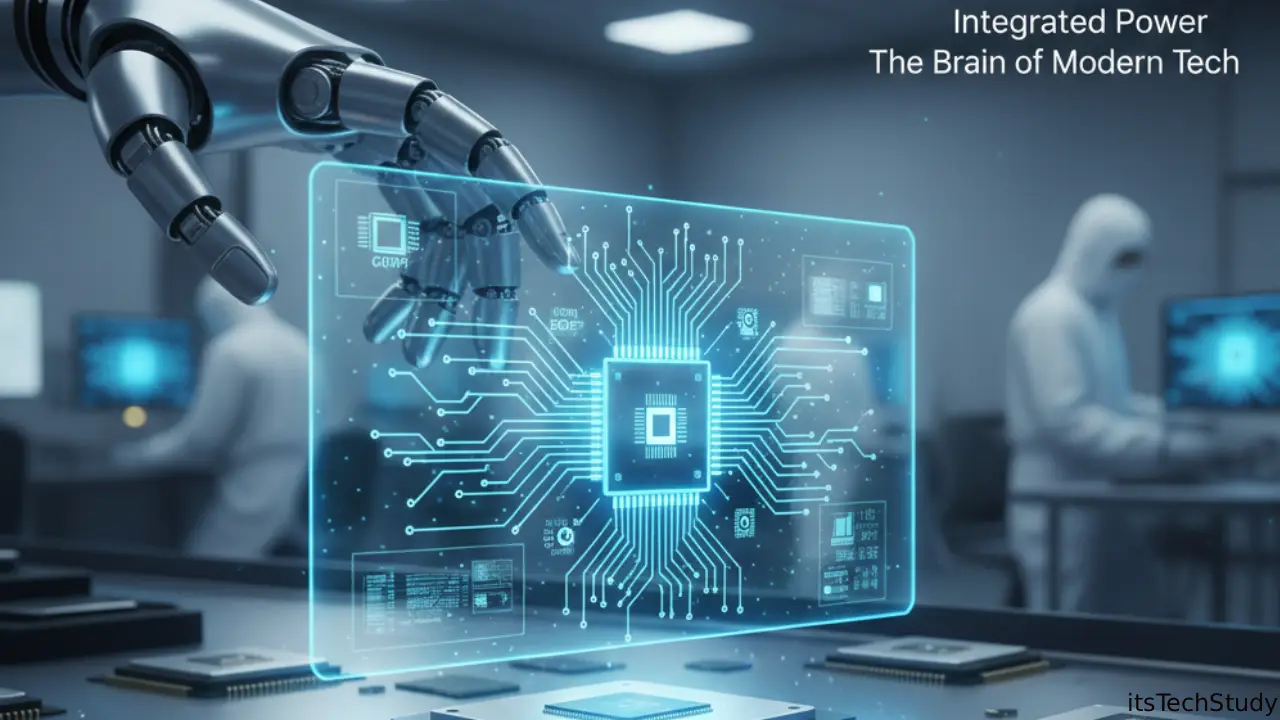
Today, whether it’s a smartphone, smartwatch, smart home gadget, AI-powered drone, electric vehicle dashboard, or medical sensor – modern devices operate faster and smarter than ever before. And at the core of this transformation lies one breakthrough technology: System-on-Chip, commonly known as SoC.
SoC technology integrates all essential electronic components into a single chip, enabling powerful performance in a compact footprint. This innovation has revolutionized modern electronics, making devices thinner, lighter, energy-efficient, and capable of handling demanding computing tasks like real-time AI processing, 4K/8K video, high-speed gaming, and edge computing.
Understanding SoCs is essential for anyone interested in tech development, hardware engineering, or simply wanting to make informed decisions when buying devices. This comprehensive guide covers everything you need to know – from architecture and working principles to advantages, limitations, use cases, and future possibilities.
What Is a System-on-Chip (SoC)?
A System-on-Chip (SoC) is an integrated circuit (IC) that consolidates multiple essential components required for computing into a single semiconductor chip. Instead of using separate hardware units, SoC combines the CPU, GPU, memory controller, modem, I/O ports, connectivity modules, and security systems within one architecture.
Key Components Typically Included in an SoC
- CPU (Central Processing Unit) – Handles general processing and system operations.
- GPU (Graphics Processing Unit) – Manages visual rendering, gaming, and graphics acceleration.
- NPU or AI Engine – Dedicated processor for machine learning and neural network calculations.
- DSP (Digital Signal Processor) – Optimized for audio, video, and signal processing tasks.
- Modem – Supports connectivity standards like 4G, 5G, Wi-Fi, NFC, and Bluetooth.
- ISP (Image Signal Processor) – Enhances photo and video capture quality in cameras.
- Memory Controller – Manages RAM and storage communication.
- Power Management Unit – Optimizes energy usage and thermal conditions.
- Security Module – Supports encryption, authentication, and biometric protection.
Because everything is integrated on a single chip, communication between components becomes faster and more efficient, resulting in improved device performance and battery life.
How Does an SoC Work?
An SoC functions like the brain of an electronic device. When a user performs any action – opening an app, capturing a photo, playing a video, or using GPS – the SoC divides the task into smaller processes handled by different built-in units.
Working Example: Taking a Photo on a Smartphone
- CPU processes the user request.
- ISP captures raw image data from the camera sensor.
- GPU renders preview and visual enhancements.
- AI Engine applies effects like portrait mode, HDR optimization, or scene recognition.
- Memory Controller stores processed image in storage.
- Security Unit encrypts the stored data.
All these operations happen in milliseconds because components communicate within the same chip without physical barriers.
Why SoCs Became Essential in Modern Devices
Before SoCs, devices relied on multiple chips mounted on printed circuit boards (PCBs). This approach faced serious drawbacks such as:
- High electricity usage
- Slower internal communication
- Increased heat production
- High cost of production and assembly
- Large device size and heavy batteries
SoCs solve these problems by combining everything into a compact, high-efficiency solution suitable for portable and smart electronics.
Comparison Table: SoC vs Traditional Multi-Chip Designs
| Feature | System-on-Chip (SoC) | Traditional Multi-Chip System |
|---|---|---|
| Integration Level | Highly integrated | Components separated |
| Energy Efficiency | Very high | Moderate to low |
| Performance Speed | Faster communication | Slower due to data travel distance |
| Device Size | Compact and lightweight | Bulky architecture |
| Cost Efficiency | Reduced manufacturing cost | Higher material and assembly cost |
| Thermal Management | Lower heat generation | Higher heat output |
| Ideal Use Cases | Mobile, IoT, wearables, EVs | Desktops, servers, industrial hardware |
Types of SoCs
1. Application-Specific SoCs
Designed for particular applications like gaming consoles, AI accelerators, routers, or medical devices.
2. General Purpose SoCs
Used in smartphones, smart TVs, laptops, and everyday consumer products.
3. Network SoCs
Support routing equipment, base stations, and network security appliances.
4. Automotive SoCs
Power advanced driver assistance systems (ADAS), infotainment screens, and autonomous driving.
5. AI and Machine Learning SoCs
Feature specialized NPUs for real-time intelligent computing.
Advantages of System-on-Chip Technology
Pros
- High performance in a compact size
- Lower power consumption leading to longer battery life
- Fast component-to-component data communication
- Cost-effective production and assembly
- Better thermal efficiency
- Ideal for small and portable devices
- Supports advanced AI, AR/VR, and edge computing
Cons
- Difficult and expensive to repair
- Limited hardware upgradability
- Complex manufacturing process
- High initial R&D cost
- Thermal throttling in intense workloads if cooling is insufficient
Where Are SoCs Used Today? – Real-World Applications
SoC technology powers almost every smart electronic device around us. Common examples include:
- Smartphones and tablets
- Smart TVs and set-top boxes
- Smartwatches and fitness wearables
- IoT devices and smart home systems
- Drones and robotics
- Gaming consoles
- Medical and industrial equipment
- Electric vehicles and autonomous cars
- Smart cameras and security systems
Popular SoC Platforms in Today’s Tech Market
| Company | Famous SoC Models | Primary Use |
|---|---|---|
| Qualcomm | Snapdragon 8 Gen series | Android flagship smartphones |
| Apple | A17 Pro, M1, M2, M3 | iPhone, iPad, Mac |
| MediaTek | Dimensity and Helio | Affordable to premium Android |
| Samsung | Exynos series | Smartphones and wearables |
| Tensor G-series | AI-powered Pixel phones | |
| NVIDIA | Orin, Drive PX | Cars, robotics, AI computing |
| Huawei | Kirin series | 5G devices (limited markets) |
How to Evaluate an SoC When Buying a Device
When purchasing a smartphone, tablet, or smart gadget, consider the following:
1. CPU Architecture
- Determines processing speed and multitasking.
- Look for ARM-based modern cores like Cortex-X or custom architectures.
2. GPU Performance
- Important for gaming, UI smoothness, and video rendering.
3. AI Engine Capabilities
- Enables features like face unlock, voice recognition, photo enhancement, and automation.
4. Battery Optimization
- Advanced power management = longer battery life.
5. Camera ISP Quality
- Supports high-resolution sensors and AI photography.
6. Connectivity
- 5G compatibility, Wi-Fi 6/7, Bluetooth versions.
7. Benchmarking Scores
- Use Antutu, Geekbench, or real-device reviews (not solely numbers).
Future of System-on-Chip Technology
The future of SoC innovation is driven by AI-centric computing, miniaturization, quantum semiconductor development, and faster wireless communication. Key upcoming trends include:
- 3nm and 2nm chip fabrication for higher efficiency
- Chiplet and modular SoC architecture
- SoCs dedicated to AI-driven automation
- Integration of quantum co-processors
- Edge computing acceleration
- Battery-less and energy-harvesting SoCs for IoT
- Integration into smart cities, agriculture, and healthcare
The continued evolution of SoC technology promises a future where everyday devices become smarter, more efficient, and deeply interconnected – forming the core of next-generation digital infrastructure.
Conclusion
System-on-Chip technology has transformed modern electronics by enabling high performance in ultra-compact, power-efficient designs. SoCs power nearly every smart device, making them essential for daily life in today’s digital era. With continuous advancements in nanometer engineering, AI processing, and chiplet integration, SoCs are shaping the future of computing – enabling smarter homes, smarter cities, autonomous vehicles, and intelligent machines.
As consumers and tech enthusiasts, understanding SoCs helps us choose better devices, appreciate engineering progress, and anticipate upcoming trends that define the next generation of computing innovation.

About the Author
Amelia Morgan is a Editor at itsTechStudy.com with 15+ years of experience in the technology industry. I write about emerging innovations, AI, and digital trends-making complex topics simple and engaging for readers.
Frequently Asked Questions (FAQ)
Q1: What is the main purpose of a System-on-Chip?
Ans: Its purpose is to integrate multiple computing components into a single chip, improving performance, efficiency, and compactness for modern electronic devices.
Q2: Which devices commonly use SoCs?
Ans: SoCs are widely used in smartphones, wearables, IoT devices, smart cars, televisions, AI robotics, and industrial automation systems.
Q3: Are SoCs better than traditional CPUs?
Ans: Yes. SoCs provide higher efficiency and performance because they integrate CPU, GPU, memory controllers, and connectivity in one chip, reducing power and latency.
Q4: Can an SoC be upgraded like a PC processor?
Ans: No, SoCs are soldered and integrated into the device, so they cannot be replaced or upgraded like traditional processors.
Q5: Which SoC is currently best for smartphones?
Ans: Popular flagship options include Apple A17 Pro, Snapdragon 8 Gen 3, and MediaTek Dimensity 9300, while mid-range buyers often choose Snapdragon 7 and Dimensity 8000 series.
Q6: Why do SoCs matter for gamers and creators?
Ans: Powerful GPUs and AI engines enable fast frame rates, 4K video editing, VR performance, and high-speed processing.





No Comments Yet
Be the first to share your thoughts.
Leave a Comment