

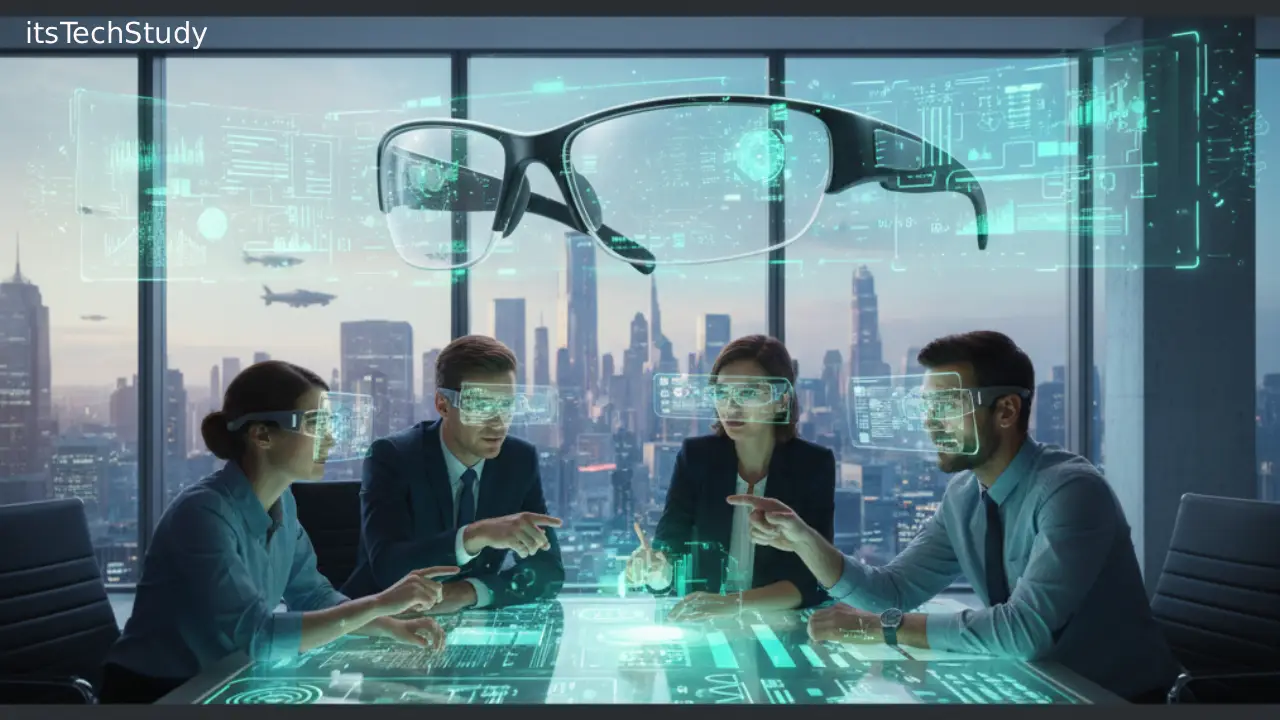
Introduction: Why Smart Glasses Are More Relevant Than Ever
Technology has consistently managed to integrate into daily life. We’ve seen smartphones turn into an extension of our hands and smartwatches become workout buddies. Now, smart glasses revolutionize the way we experience the world. Although the idea of smart glasses is not new, previous attempts such as Google Glass in 2013 provided only a glimpse. The current progress in AI, AR, thin displays, and connectivity is finally making them practical, fashionable, and potent.
As of 2025, the new trends in technology focus on immersive, wearables, and AI-powered personalization. Smart glasses have made a comeback as one of the most thrilling tech innovations. So what drives these sci-fi glasses? Let’s take a look at the fascinating technology that makes smart glasses tick, their advantages, drawbacks, and where they fit into technology’s future.
Smart glasses are no longer a futuristic concept-they are the result of rapid advancements in miniaturized hardware, artificial intelligence, and sensor technology working seamlessly together. At the core of smart glasses lies a combination of micro-displays, low-power processors, advanced optics, and contextual AI that transforms how users interact with digital information in the real world. Technologies such as waveguide lenses enable lightweight, transparent displays, while embedded cameras, motion sensors, and voice recognition systems allow hands-free interaction and real-time data capture. With improved battery efficiency, edge computing, and wireless connectivity like Bluetooth and 5G, modern smart glasses are evolving beyond simple notifications into powerful wearable platforms for navigation, remote assistance, health monitoring, and immersive augmented reality experiences. As these technologies mature, smart glasses are positioned to redefine wearable innovation by blending digital intelligence naturally into everyday life.
Smart glasses represent the next major leap in wearable technology, combining advanced optics, sensors, and augmented reality (AR) to seamlessly merge digital information with the real world. Powered by components such as micro-displays, waveguide lenses, integrated cameras, voice control, and AI-driven processors, smart glasses enable hands-free access to navigation, real-time data, remote collaboration, and immersive experiences. From enterprise applications in manufacturing and healthcare to personal use in communication and entertainment, these devices are transforming how we interact with information and our surroundings. While challenges such as battery life, privacy concerns, and design optimization remain, rapid progress in miniaturization and display technology is accelerating adoption. As tech companies continue to innovate, smart glasses are poised to redefine the future of connected living, offering a new era of intelligent, lightweight, and user-friendly wearable computing.
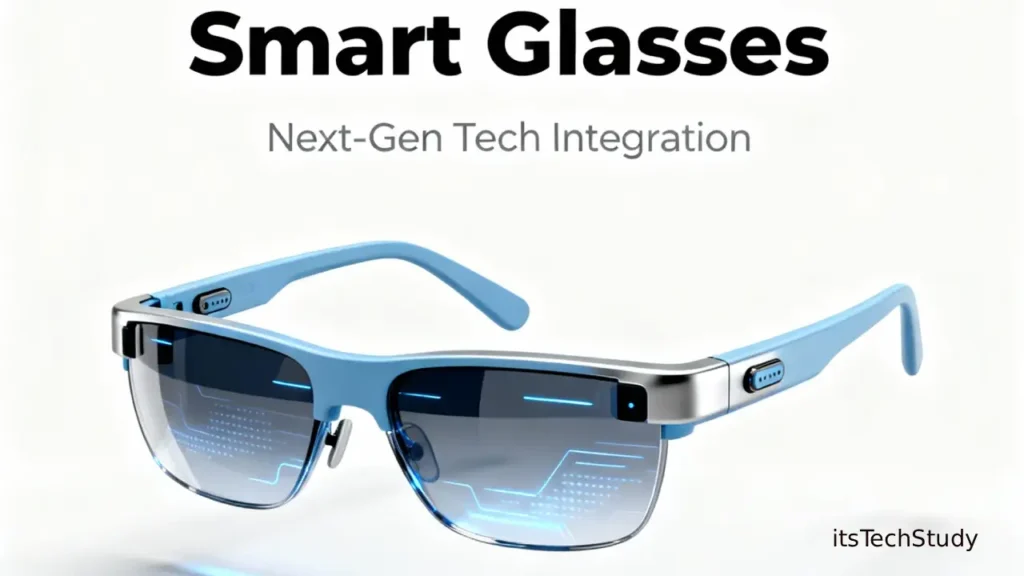
How Smart Glasses Work: A Breakdown of Core Technologies
1. Display Systems
The heart of smart glasses is the way in which they present information to the wearer. Smart glasses today employ display technologies like:
- Waveguide Displays: Thin and transparent layers that channel light into the eyes while leaving the glass lens unclogged.
- MicroLED or OLED Microdisplays: Tiny and high-definition displays integrated into the glasses for crisp images.
- Holographic Projection: Some models use holographic optics for immersive AR experiences.
These displays project information like text messages, maps, or 3D overlays directly in front of your eyes, allowing hands-free interaction.
2. Sensors and Cameras
Smart glasses have multiple sensors that enable context awareness:
- IMU (Inertial Measurement Unit) – Tracks movement, acceleration, and orientation.
- Depth Sensors – Essential for AR features like measuring objects in real-time.
- Cameras – Capture photos, record videos, and provide visual data for AI advancements like facial recognition.
3. Connectivity
Smart glasses must remain connected to the virtual world to work well. Some of the most important connectivity technologies are:
- Bluetooth 5.0 or later: Connects with smartphones or other smart devices.
- Wi-Fi 6/6E: Ensures fast internet access for streaming and cloud services.
- 5G Integration: Enables real-time AR/VR experiences with minimal delay.
4. Audio and Voice Assistants
Audio feedback is important. Many glasses include:
- Bone Conduction Speakers: Deliver sound without blocking ears.
- Microphones with Noise Cancellation: Allow for clear voice commands.
- AI-driven Assistants: Integration with Siri, Alexa, or Google Assistant for smart control.
5. Power and Battery Management
Getting efficient power systems into light frames is one of the greatest challenges. Solutions currently available are:
- Thin lithium-polymer batteries concealed in temples.
- Low-power processors specifically designed for AR applications.
- Wireless recharging docks for convenient recharging.
Table: Comparison of Main Features of Popular Smart Glasses
| Feature | Google Glass Enterprise | Ray-Ban Meta Smart Glasses | Nreal Air AR Glasses |
|---|---|---|---|
| Display Tech | Prism Display | No display + camera + audio | MicroOLED AR display |
| Camera | 8MP Camera | 12MP Ultra-wide | None (display focused) |
| Audio System | Bone Conduction | Open-ear speakers | Headphones compatible |
| Connectivity | Wi-Fi + Bluetooth | Bluetooth + Wi-Fi | USB-C tethered |
| Battery Life | ~5 hours | ~4 hours | Depending on tethered device |
| Target Audience | Enterprise workers | Social media creators | AR entertainment users |
Pros and Cons of Smart Glasses
Pros
- Hands-free access to information.
- Greater productivity in sectors such as healthcare, logistics, and construction.
- AR experiences in a compact form without heavy headsets.
- Trendy designs that can be worn daily.
- Coupling with AI for customized experiences.
Cons
- Limited battery life when compared to smartphones.
- Privacy concerns owing to integrated cameras.
- Exorbitant price for high-end models.
- Low fields of view for AR displays.
- Total reliance on smartphones for complete functionality.
Uses of Smart Glasses in 2025
In Daily Life
- Navigation overlays while on foot or by bike.
- Real-time language translation displayed on screen.
- Instant notifications without having to pull out a phone.
In Professional Use
- Healthcare: Surgeons using AR overlays for precise operations.
- Manufacturing: Workers guided through assembly tasks.
- Remote Assistance: Field engineers troubleshooting with live expert support.
In Entertainment
- AR gaming with real-world overlays.
- Immersive sports viewing with live stats displayed.
- Social media content creation using built-in cameras.
Tips for Buying Smart Glasses
- Check Display Type: Waveguide or OLED displays provide the highest clarity.
- Consider Battery Life: At least 3-4 hours for real-world daily usage.
- Look for Comfort: Thin and light frames allow for long-term wear.
- Verify Connectivity: Ensure they are compatible with your smartphone or PC.
- Consider Use Case: Decide whether you require them for AR-intensive activity, photography, or light notifications.
Future of Smart Glasses: Where Technology is Going
The future smart glasses will revolutionize things in new ways:
- AI-Powered Personalization: Smarter contextual data based on user behavior.
- Enhanced AR Displays: Broader fields of view and actual 3D holograms.
- Smart Integration with Smart Devices: Becoming a part of a smart home and work ecosystem.
- Miniaturization: Thinner frames without compromising on the battery life.
- Health and Wellness Features: Detection of eye strain, posture adjustment, or fitness monitoring.
As technology advances in 2025, smart glasses are likely to become as ubiquitous as smartphones now.
Conclusion: Smart Glasses and the Future of Technology
Smart glasses are a thrilling convergence of AI(Read more about AI) breakthroughs, AR, and wearable technology. They offer the promise of hands-free access to information, immersive experiences, and actual productivity gains. Although battery constraints and privacy concerns present themselves, research and development are proceeding in the direction of making smart glasses the focal point of the future of technology.
For technophiles, trendsetters, and companies, an investment in this technology is joining the next revolution of wearable transformation. The path from cumbersome prototypes is ripening into functional, fashionable, cutting-edge solutions, and soon in the next couple of years, smart glasses may be among the most desirable technology gadgets to possess.

About the Author
Amelia Morgan is a Editor at itsTechStudy.com with 15+ years of experience in the technology industry. I write about emerging innovations, AI, and digital trends-making complex topics simple and engaging for readers.
Technology Behind Smart Glasses
Q1: Are smart glasses safe for everyday use?
Ans: Newer smart glasses incorporate low-power displays, which are safe for the eyes. Similar to smartphones, moderation in use is suggested.
Q2: Will smart glasses replace smartphones?
Ans: Not yet. Although they provide hands-free notification and AR capabilities, smartphones are still the central hub. Smart glasses act more as assistants.
Q3: How much do smart glasses cost in 2025?
Ans: Pricing varies from $300 for minimal models to more than $2000 for AR glasses for enterprises, based on capabilities.
Q4: Do smart glasses function offline?
Ans: Some basic functions like cameras and offline apps can operate, but most of the smart aspects like navigation, live translation, and AR overlays need an internet connection.
Q5: Do smart glasses involve privacy issues?
Ans: Glass-mounted cameras can be an issue in public areas. Most feature LED lights to indicate when they are recording.
Q6: What are the industries smart glasses help most?
Ans: Healthcare, logistics, construction, and customer service derive great productivity benefits from AR-based workflows.








No Comments Yet
Be the first to share your thoughts.
Leave a Comment