

Technology used to be predictable. You clicked a button, opened a program, entered data, and got a result. Software followed rules. Machines executed commands. Systems were built to react only when humans told them what to do. For years, that was enough.
But that era is fading fast.
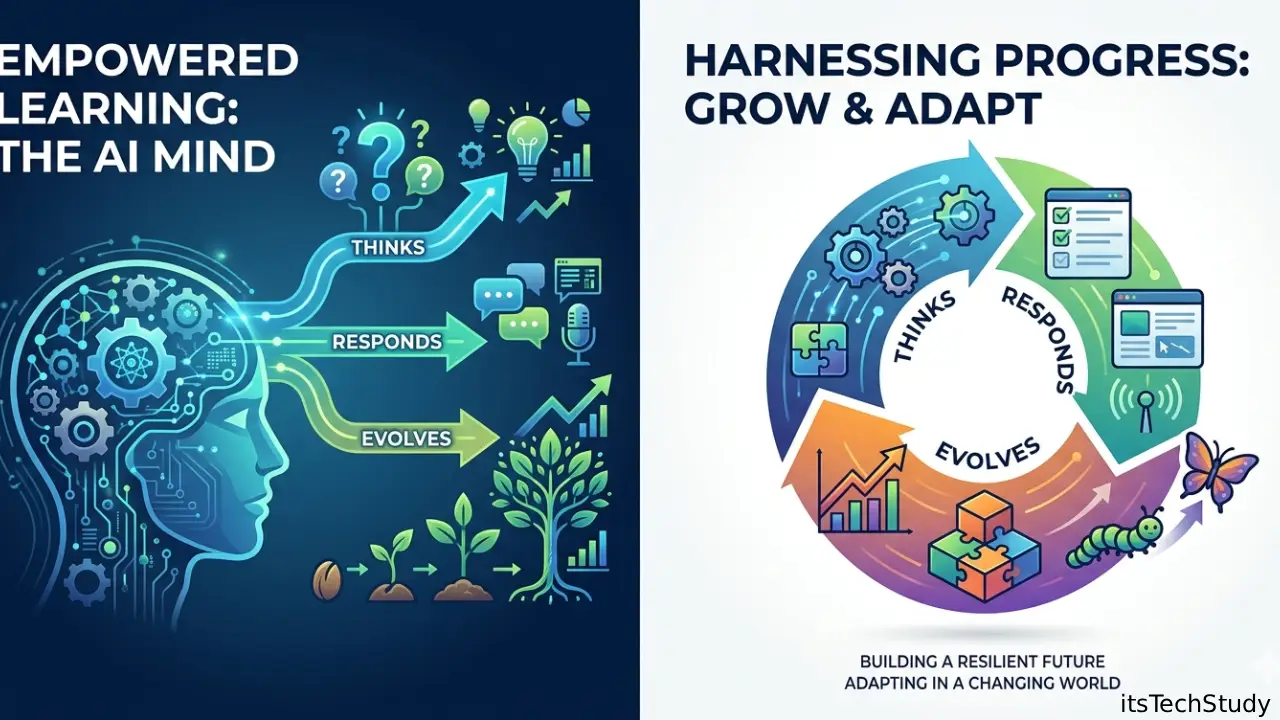
Today, technology is entering a new phase-one where it doesn’t just process instructions. It thinks, responds, and evolves. That phrase captures one of the most important shifts happening in the digital world right now. We are moving from static tools to intelligent systems powered by artificial intelligence, machine learning, adaptive automation, and agentic AI. These systems don’t simply wait for user input. They analyze context, predict needs, adapt behavior, and improve over time.
This change matters because users no longer want software that merely works. They want software that understands. Businesses no longer want dashboards that only display data; they want platforms that interpret data and recommend actions. Consumers no longer want generic apps; they want personalized, real-time, responsive digital experiences.
Industry forecasts for 2026 increasingly point to a world where AI moves beyond simple assistants into multi-agent systems, AI-native applications, and context-aware experiences that act more like teammates than tools. Analysts and enterprise leaders are highlighting a shift from experimental AI pilots to production-ready, self-improving systems that can orchestrate workflows, personalize interfaces, and make intelligent decisions at scale.
In simple terms, the future of technology is no longer about faster hardware alone. It’s about smarter systems.
This article breaks down what “thinks, responds, and evolves” really means in technology, why it matters, where it’s already showing up, and how businesses and creators can prepare for the next wave of innovation.
What Does “Thinks, Responds, and Evolves” Mean in Technology?
At first glance, the phrase sounds philosophical. In reality, it describes a very practical transformation in how modern digital systems operate.
Thinks: Technology That Interprets and Reasons
When we say technology “thinks,” we don’t mean it has human consciousness. We mean it can:
- Analyze patterns
- Understand context
- Infer intent
- Make recommendations
- Solve multi-step problems
This is where AI models, large language models (LLMs), and reasoning systems come in. Instead of blindly executing a command, these systems can evaluate inputs, compare options, and generate intelligent outputs.
Examples include:
- AI copilots that summarize meetings and draft action items
- Code assistants that suggest optimized solutions
- Fraud detection systems that spot unusual behavior before damage occurs
- Recommendation engines that predict what users want next
In 2026, many experts expect this shift to deepen as “reasoning-first” AI and autonomous agents become embedded in enterprise software and workflows.
Responds: Technology That Reacts in Real Time
Traditional systems wait for commands. Modern systems monitor environments and respond automatically.
Responsive technology can:
- Adjust UI based on user behavior
- Trigger alerts when anomalies appear
- Change recommendations in real time
- Adapt workflows depending on context
- Deliver personalized outputs instantly
Think of:
- Streaming platforms that refine recommendations while you browse
- Smart customer support systems that route users based on urgency and intent
- E-commerce engines that change offers based on behavior
- AI chatbots that maintain conversational context
This is the backbone of responsive systems, real-time AI, and context-aware computing.
Evolves: Technology That Improves Over Time
This is the most exciting part.
Evolving technology doesn’t stay fixed after launch. It learns from:
- User interactions
- Feedback loops
- Performance data
- Environmental changes
- New business goals
That means the system becomes more accurate, efficient, and useful over time.
This evolution happens through:
- Machine learning model retraining
- Reinforcement loops
- Behavioral analytics
- Personalization engines
- Adaptive UX design
In short, modern systems are becoming self-improving digital products.
Why This Shift Matters More Than Ever
The phrase “thinks, responds, and evolves” isn’t just a catchy idea. It reflects a competitive reality.
The Old Model Is Breaking
For years, businesses relied on:
- Static apps
- Rule-based automation
- Manual decision-making
- Generic user experiences
- Siloed data systems
These tools still exist, but they struggle in a world where:
- Customers expect instant personalization
- Teams are overwhelmed by data
- Markets change faster than product cycles
- Cyber threats evolve continuously
- Operational efficiency matters more than ever
This is why organizations are moving toward AI-native architecture, intelligent automation, and adaptive systems. Reports from major enterprise technology leaders in 2026 consistently describe AI as shifting from a feature to the foundation of software itself.
Core Technologies That Make Systems Think, Respond, and Evolve
Below are the main building blocks powering this new generation of intelligent technology.
1. Artificial Intelligence (AI)
AI enables systems to process data, recognize patterns, and generate decisions or content.
Common uses:
- Chatbots
- Virtual assistants
- Predictive analytics
- Image recognition
- Natural language understanding
2. Machine Learning (ML)
Machine learning helps systems improve performance based on data instead of hard-coded rules.
Best for:
- Personalization
- Forecasting
- Recommendation systems
- Fraud detection
- Dynamic pricing
3. Generative AI
Generative AI creates content such as:
- Text
- Images
- Code
- Audio
- Summaries
- Reports
This is a major reason software now feels more “alive” and interactive.
4. Agentic AI
One of the biggest 2026 trends is agentic AI-AI systems that can plan, reason, call tools, and complete tasks with limited human intervention.
Examples include:
- AI research agents
- Autonomous workflow assistants
- Multi-agent task orchestration
- AI-powered business operations tools
Enterprise forecasts increasingly describe agents as moving from single-purpose bots to orchestrated digital workforces.
5. Adaptive User Experience (Adaptive UX)
Adaptive UX changes interfaces, suggestions, and flows based on:
- User behavior
- Device context
- Intent signals
- Historical usage
- Environment
This creates smoother, more personalized digital interactions.
Key Features of Intelligent Technology Systems
Here’s a simple comparison of traditional systems vs intelligent systems:
| Feature | Traditional Technology | Intelligent Technology |
|---|---|---|
| Behavior | Rule-based | Context-aware |
| Input Handling | Manual commands | Natural language + multimodal |
| Decision-Making | Human-led | AI-assisted or AI-driven |
| Personalization | Limited | Dynamic and continuous |
| Learning Ability | Static after deployment | Improves with data and feedback |
| Automation | Fixed workflows | Adaptive workflows |
| User Experience | Interface-driven | Intent-driven |
This is exactly why modern tech stacks are increasingly described as AI-native, intent-driven, and self-improving.
Real-World Examples of Technology That Thinks, Responds, and Evolves
Smart Assistants and AI Copilots
AI copilots can now:
- Summarize documents
- Draft emails
- Generate code
- Analyze spreadsheets
- Suggest next actions
These are no longer novelty tools-they’re becoming embedded in everyday productivity software.
E-Commerce Personalization Engines
Online stores use AI to:
- Recommend products
- Predict buying intent
- Detect cart abandonment risk
- Personalize landing pages
- Adjust promotions in real time
Intelligent Customer Support
Modern support systems can:
- Detect sentiment
- Prioritize urgent tickets
- Auto-suggest solutions
- Route conversations to the best team
- Learn from resolved cases
Cybersecurity Systems
AI-driven security platforms increasingly:
- Detect anomalies
- Identify suspicious behavior
- Trigger automated containment
- Learn from attack patterns
Industrial and Enterprise Automation
In business environments, intelligent systems can:
- Optimize supply chains
- Forecast demand
- Automate approvals
- Coordinate workflows
- Monitor performance across departments
Pros and Cons of Technology That Thinks, Responds, and Evolves
No innovation is perfect. Smart systems offer major benefits—but they also introduce new challenges.
Pros
- Better personalization: Users get more relevant experiences
- Faster decisions: AI reduces analysis time
- Higher efficiency: Repetitive tasks can be automated
- Continuous improvement: Systems get better with usage
- Scalability: Smart workflows support growth without linear hiring
- Reduced friction: Natural language and adaptive interfaces simplify complex tools
Cons
- Data dependency: Poor data leads to poor decisions
- Bias risk: AI can reflect flawed training data
- Complex implementation: AI systems need governance and maintenance
- Privacy concerns: Personalization must be handled responsibly
- Over-automation risk: Not every process should be autonomous
- Trust issues: Users may resist systems they don’t understand
The biggest takeaway? Smart technology works best when paired with human oversight, transparent design, and clear governance.
How Businesses Can Build Technology That Thinks, Responds, and Evolves
If you’re a startup founder, developer, product manager, or digital business owner, this shift should shape your roadmap.
Step 1: Start With a Real Problem
Don’t add AI just because it’s trendy.
Ask:
- What task is slow, repetitive, or frustrating?
- Where do users need faster answers?
- What decisions are being delayed by too much data?
- Which workflows can benefit from intelligence, not just automation?
Step 2: Build Around Data Quality
AI is only as good as the data it sees.
Focus on:
- Clean structured data
- Consistent tagging
- Real-time signals
- User feedback loops
- Data governance
Step 3: Design for Human-in-the-Loop
The best systems are collaborative, not fully detached.
Use AI to:
- Suggest
- Prioritize
- draft
- summarize
- detect
- recommend
But keep humans in control for:
- Final approvals
- High-stakes decisions
- Compliance-sensitive actions
- Brand-sensitive communication
Step 4: Use Adaptive UX, Not Just Smart Features
A truly intelligent product doesn’t just “have AI.”
It:
- Feels easier to use over time
- Learns what users prefer
- Removes unnecessary steps
- Anticipates intent
- Reduces cognitive load
Step 5: Measure Evolution
If your product is supposed to evolve, track whether it actually does.
Monitor:
- Accuracy over time
- User satisfaction
- Task completion speed
- Automation success rate
- Error reduction
- Engagement improvement
SEO and Content Strategy: Why This Topic Matters for Tech Blogs
From an SEO perspective, “thinks, responds, and evolves” is a strong thematic concept because it connects naturally to multiple high-value search terms, including:
- artificial intelligence
- future of technology
- intelligent systems
- adaptive technology
- AI automation
- machine learning trends
- agentic AI
- AI-native software
- smart applications
- digital transformation
This makes it ideal for:
- Thought leadership articles
- SaaS landing page content
- Tech startup blogs
- AI product explainers
- Future technology trend posts
If you’re building a tech content site, this kind of topic can attract both broad readers and niche professionals.
The Future: From Tools to Teammates
One of the clearest signals in 2026 is that software is changing roles.
Instead of being:
- static
- menu-driven
- rule-locked
- reactive
…it is becoming:
- conversational
- proactive
- adaptive
- orchestrated
- intent-driven
Industry outlooks increasingly describe a future where apps are not just interfaces but intelligent layers that interpret goals, coordinate tasks, and improve continuously. The rise of multi-agent orchestration, AI-native architecture, and adaptive interaction design is pushing software from “tool” status toward “digital teammate” status.
That doesn’t mean humans disappear.
It means the relationship changes.
The most successful digital products of the next few years won’t just help users click faster. They’ll help users think better, decide sooner, and do more with less friction.
Conclusion
“Thinks, responds, and evolves” is more than a phrase. It’s a powerful summary of where technology is headed.
We are leaving behind the age of static software and entering the era of intelligent systems—systems that understand context, adapt to user needs, automate decisions, and improve over time. Whether it’s AI-powered software, adaptive user experiences, machine learning platforms, or agentic AI workflows, the message is clear: the future belongs to technology that behaves less like a rigid tool and more like a smart collaborator.
For businesses, this means rethinking digital products from the ground up. For developers, it means building systems around data, feedback, and adaptability. For content creators and tech publishers, it means focusing on the trends shaping the next generation of software.
If you want to stay ahead in tech, don’t just ask whether a system works.
Ask whether it can think, respond, and evolve.
That’s where the real future begins.

About the Author
Tobias Hale is a technology writer and software analyst with a sharp eye on the ever-evolving world of digital innovation. With a deep passion for clean code, secure systems, and emerging technologies, Tobias brings clarity to complex topics - from the latest in operating system updates to cutting-edge software security practices.
FAQ: Thinks, Responds, and Evolves in Technology
Q1: What does “thinks, responds, and evolves” mean in simple terms?
Ans: It refers to modern technology systems that can analyze information, react in real time, and improve over time. These systems use AI, machine learning, and automation to become smarter and more useful instead of staying static.
Q2: Is this the same as artificial intelligence?
Ans: Not exactly. Artificial intelligence is one major part of it, but the full concept also includes: Real-time responsiveness Adaptive interfaces Continuous learning Workflow automation Context-aware decision-making So AI is the engine, but “thinks, responds, and evolves” describes the full behavior of the system.
Q3: What industries benefit most from this type of technology?
Ans: Almost every industry can benefit, but the strongest use cases are in: SaaS and software products E-commerce Healthcare technology Finance and fintech Customer support Manufacturing Logistics Cybersecurity Education technology Anywhere there is data, repetition, or decision-making, intelligent systems can create value.
Q4: What is agentic AI, and why is it important?
Ans: Agentic AI refers to AI systems that can plan, reason, and take action across multiple steps instead of just answering prompts. It’s important because it moves technology beyond passive assistance into active task execution, making automation far more powerful and practical.
Q5: Are there risks to using self-improving AI systems?
Ans: Yes. The main risks include: Biased outputs Poor data quality Over-automation Privacy issues Lack of transparency Compliance challenges That’s why strong governance, testing, and human oversight are essential.
Q6: How can small businesses start using intelligent technology?
Ans: Small businesses should start simple: Use AI chat support Add personalized email automation Use AI content or CRM assistants Implement recommendation tools Automate repetitive workflows Track results before scaling You don’t need a huge budget-you need a clear use case.


No Comments Yet
Be the first to share your thoughts.
Leave a Comment