

Introduction: From Tangled Cables to True Convenience
Not long ago, charging a device meant hunting for the right cable, dealing with frayed wires, or watching helplessly as your phone slipped off a cluttered desk while still plugged in. As our reliance on smartphones, wearables, and wireless accessories exploded, so did frustration around charging limitations. Faster processors, brighter displays, and always-on connectivity pushed battery consumption higher, while charging methods remained stubbornly old-fashioned.
This growing mismatch paved the way for wireless charging technology, a solution that promised simplicity, safety, and seamless integration into daily life. Today, wireless charging is no longer a luxury feature-it’s becoming an expectation. From flagship smartphones and earbuds to electric vehicles and smart furniture, cable-free power delivery is quietly transforming how we interact with technology.
Yet, challenges remain. Charging speeds, energy efficiency, heat management, and compatibility standards continue to evolve. In this article, we’ll explore how wireless charging works, where it excels, where it struggles, and why it’s positioned as a cornerstone of the future connected ecosystem.
What Is Wireless Charging and How Does It Work?
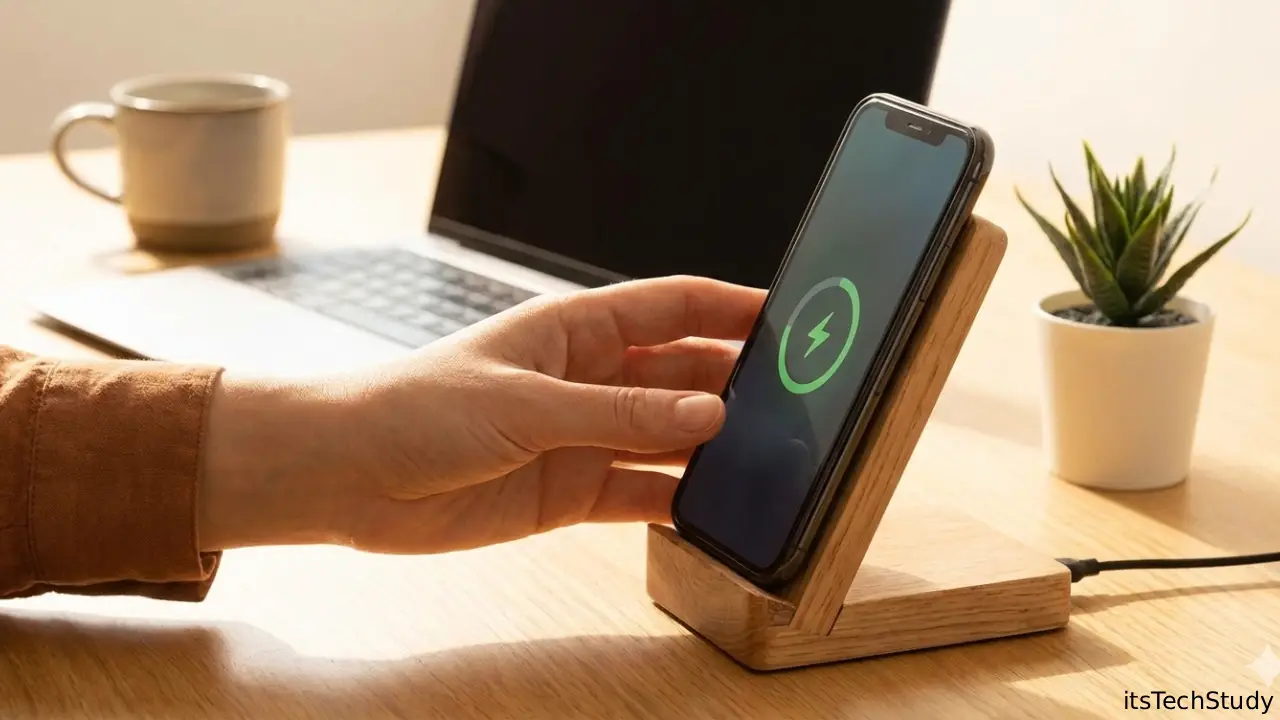
Wireless charging, also known as inductive charging, allows devices to recharge batteries without physical connectors. Instead of sending electricity through a cable, power is transferred wirelessly using electromagnetic fields.
The Basic Principle Behind Wireless Charging
Wireless charging relies on electromagnetic induction:
- A charging pad (transmitter) generates an alternating electromagnetic field.
- A receiver coil inside the device converts this field into electrical current.
- The current charges the battery safely and efficiently.
This process happens over very short distances, typically a few millimeters, which is why devices must rest directly on the charging surface.
Qi Standard: The Backbone of Modern Wireless Charging
The Qi (pronounced “chee”) wireless charging standard, developed by the Wireless Power Consortium (WPC), has become the industry benchmark. Most modern smartphones, including Android and iOS devices, support Qi-based wireless charging.
Key advantages of the Qi standard include:
- Broad device compatibility
- Built-in safety features
- Continuous performance improvements
Evolution of Wireless Charging Technology
Wireless charging didn’t appear overnight. It has evolved steadily alongside consumer electronics.
Early Experiments and Limitations
Early wireless charging solutions were slow, inefficient, and bulky. Heat generation was high, alignment was tricky, and power delivery was limited. These issues made early adopters skeptical.
Modern Advancements Driving Adoption
Recent breakthroughs have significantly improved performance:
- Fast wireless charging (15W–50W)
- Improved coil alignment
- Smart power management chips
- Better thermal control
As a result, wireless charging now rivals wired solutions for everyday use.
Types of Wireless Charging Technologies
Not all wireless charging systems work the same way. Understanding the differences helps consumers and manufacturers make smarter choices.
Inductive Charging
- Most common type
- Short-range power transfer
- Used in smartphones, earbuds, smartwatches
Resonant Wireless Charging
- Allows more flexible positioning
- Can charge multiple devices simultaneously
- Higher efficiency over slightly longer distances
Radio Frequency (RF) Charging
- Long-range, low-power charging
- Ideal for IoT sensors and wearables
- Not suitable for high-power devices (yet)
Wireless Charging vs Wired Charging: A Practical Comparison
| Feature | Wireless Charging | Wired Charging |
|---|---|---|
| Convenience | Very high | Moderate |
| Charging Speed | Medium to fast | Fast to ultra-fast |
| Port Wear | None | Cable/port degradation |
| Energy Efficiency | Slightly lower | Higher |
| Safety | High (sealed ports) | Depends on cable quality |
While wired charging still dominates in speed, wireless charging wins in durability and ease of use.
Pros and Cons of Wireless Charging
Advantages of Wireless Charging
- Cable-free convenience
- Reduced wear on charging ports
- Safer in dusty or humid environments
- Clean, minimalist setups
- Enables sealed, water-resistant devices
Disadvantages of Wireless Charging
- Slower than high-speed wired charging
- Slightly lower energy efficiency
- Requires precise placement
- Generates more heat in some cases
For many users, the convenience outweighs the drawbacks-especially as technology continues to mature.
Wireless Charging in Real-World Applications
Wireless charging is expanding beyond smartphones.
Smartphones and Wearables
Most flagship phones, smartwatches, and earbuds now support wireless charging, making it easier to power multiple devices on a single pad.
Automotive and Smart Furniture Integration
Modern cars feature built-in wireless charging pads, while desks, nightstands, and coffee tables increasingly include embedded charging coils.
Electric Vehicles and Industrial Use
Wireless charging is being tested for :
- EV parking pads
- Autonomous robots
- Medical equipment
These applications reduce downtime and eliminate mechanical connectors.
Efficiency, Safety, and Heat Management
Is Wireless Charging Safe?
Yes. Qi-certified chargers include:
- Foreign object detection
- Overvoltage protection
- Temperature monitoring
These safeguards ensure safe daily use.
Managing Heat and Power Loss
Heat is the primary byproduct of wireless charging inefficiency. Manufacturers address this using:
- Advanced coil designs
- Graphene and vapor chamber cooling
- AI-based power optimization
The Future of Wireless Charging Technology
The next phase of wireless charging focuses on:
- True spatial charging (charging devices at a distance)
- AI-controlled power delivery
- Universal cross-device compatibility
- Higher wattage with lower heat
As ecosystems mature, wireless charging will become invisible-built into surfaces, vehicles, and public spaces.
Conclusion: Why Wireless Charging Matters More Than Ever
Wireless charging is more than a convenience feature-it represents a shift toward frictionless technology experiences. While challenges like efficiency and speed remain, innovation continues to close the gap. As devices become smarter, smaller, and more integrated into our lives, cable-free power delivery will play a crucial role in shaping the future of consumer technology.
For users, the takeaway is simple: wireless charging is no longer optional-it’s foundational.

About the Author
Tobias Hale is a technology writer and software analyst with a sharp eye on the ever-evolving world of digital innovation. With a deep passion for clean code, secure systems, and emerging technologies, Tobias brings clarity to complex topics - from the latest in operating system updates to cutting-edge software security practices.






No Comments Yet
Be the first to share your thoughts.
Leave a Comment