

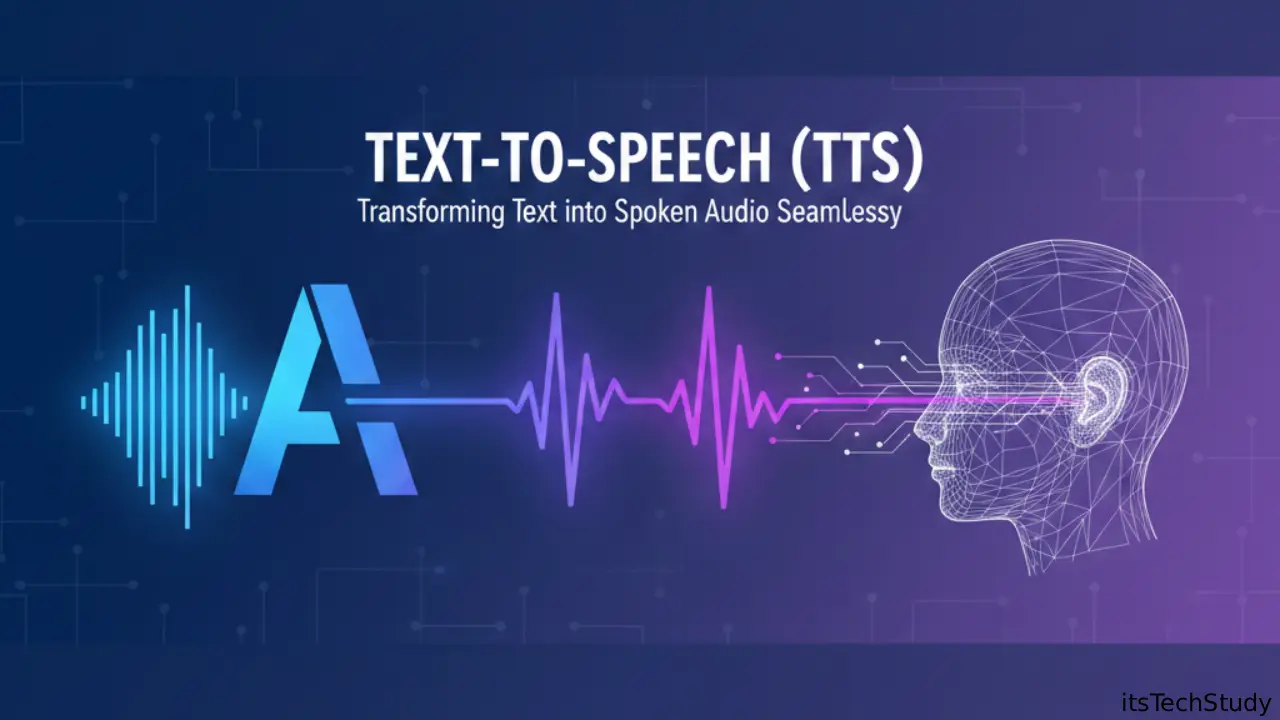
Introduction: Why Text-to-Speech Matters More Than Ever
The way we interact with technology has changed dramatically over the past decade. From tapping on screens to talking to AI assistants, we’ve moved into a world where digital communication is no longer confined to text. Yet, even with advanced devices, fast internet, and emerging technologies like 5G, millions of people still struggle with accessibility, multitasking, and information overload..
This is where Text-to-Speech (TTS) steps in as a powerful bridge between humans and machines.
TTS technology has evolved from robotic, metallic voices to incredibly natural, expressive speech that sounds nearly indistinguishable from real humans. Whether you’re using a navigation app, listening to an audiobook, or depending on assistive technologies, TTS is silently shaping your daily experiences..
But behind this convenience lies a complex ecosystem of AI models, neural networks, and digital signal processing working together to convert text into lifelike audio. And as devices become smarter, faster, and more connected through technologies like 5G, the future of TTS looks even more promising.
This comprehensive guide dives deep into everything you need to know about Text-to-Speech – how it works, why it’s booming, the challenges involved, key applications, comparisons, pros and cons, FAQs, and future opportunities.
What Is Text-to-Speech (TTS)?
Text-to-Speech (TTS) is a speech-generation technology that converts written text into audible, natural-sounding voice output. It enables computers, apps, and smart devices to “speak” using synthetic voices created using linguistic rules, AI algorithms, and machine learning.
Why TTS Has Become Mainstream
- Demand for accessibility tools
- Boom in voice assistants and smart devices
- Growth of audiobooks and voice content
- Faster networks like 5G enabling real-time streaming
- AI advancements producing human-like voices
How Text-to-Speech Works: Behind the Technology
Understanding TTS requires breaking it down into key stages:
1. Text Processing & Normalization
Before converting text into speech, the system must understand:
- punctuation
- abbreviations
- dates & numbers
- formatting
- slang or informal phrases
This process ensures the system interprets the text the way a human would speak it.
2. Linguistic & Phonetic Analysis
The system breaks text into smaller units like:
- phonemes
- syllables
- intonations
- pauses
This tells the TTS engine how to pronounce each part.
3. Acoustic Modeling
Powered by deep learning, this stage predicts:
- tone
- pitch
- emotion
- stress
- rhythm
Neural networks like Tacotron, WaveNet, and FastSpeech have significantly improved this area.
4. Speech Synthesis
The final stage transforms the acoustic model into actual audio using:
- vocoders
- waveform generators
- digital signal processing
The result is smooth, natural, lifelike speech.
Types of Text-to-Speech Systems
1. Concatenative TTS
Uses real recorded voice snippets stitched together.
- Good quality
- Limited flexibility
- Requires huge datasets
2. Parametric TTS
Uses mathematical models to generate speech.
- Robotic sounding
- Lightweight
- Outdated today
3. Neural TTS (Modern Standard)
Uses AI & deep learning to create highly natural voices.
- Expressive
- Customizable
- Most widely used today
- Enhanced with 5G and cloud inference
Why TTS Is Important: Key Benefits
1. Accessibility for Everyone
TTS empowers people with:
- visual impairments
- reading difficulties
- cognitive disabilities
- language barriers
2. Multitasking Made Easy
From listening to emails to consuming articles hands-free, TTS supports productivity.
3. Enhanced Learning
Students can learn through:
- auditory reinforcement
- quicker content consumption
- reduced screen fatigue
4. Globalization and Language Reach
Brands can distribute content across regions using multilingual TTS.
5. Cost-Effective Content Creation
Instead of hiring voice actors, businesses can produce:
- product demos
- ads
- tutorials
- phone-system voices
Comparison Table: TTS vs Human Voice Recording
| Feature | Text-to-Speech (TTS) | Human Voice Recording |
|---|---|---|
| Cost | Low to medium | High |
| Speed of Production | Immediate | Time-consuming |
| Voice Variety | Hundreds of options | Limited |
| Emotion & Expression | Improving with neural TTS | Excellent |
| Editing Flexibility | Very high | Low |
| Realism | High (modern TTS) | Perfect |
| Suitable For | Apps, articles, learning, automation | Films, ads, storytelling |
Popular Use Cases of Text-to-Speech
1. Smart Devices
Voice assistants like:
- Google Assistant
- Siri
- Alexa
- Bixby
use real-time TTS for answers and notifications.
2. Navigation Systems
Maps apps convert text instructions into spoken directions, essential for driving safety.
3. Education & e-Learning
TTS helps with:
- audiobook creation
- online course narration
- language learning
- literacy support
4. Content Creation
Bloggers, marketers, and YouTubers use TTS for:
- explainer videos
- podcasts
- tutorials
5. Customer Support & IVR Systems
Phone bots rely heavily on TTS for:
- call routing
- announcements
- automated guides
6. Healthcare Assistive Tools
Patients with speech disabilities use TTS-based augmentative communication apps.
7. The Impact of 5G on TTS
As 5G brings faster speeds and low latency, TTS becomes:
- quicker
- more portable
- real-time across devices
Cloud-based TTS models can now operate instantly, improving smart devices and automation.
Pros and Cons of Text-to-Speech
Pros
- Highly scalable for businesses
- Fast audio generation
- Multilingual support
- Accessibility friendly
- Integrates easily with apps
- Continuous quality improvements
Cons
- Some voices still sound synthetic
- Requires internet for advanced TTS
- Emotional range still developing
- Potential mispronunciation for rare words
Choosing the Right TTS Engine: Factors to Consider
1. Voice Quality
Look for:
- natural intonation
- emotional range
- realistic rhythm
2. Language & Accent Support
Ensure the engine covers:
- required dialects
- regional pronunciations
3. Integration Features
Check compatibility with:
- mobile apps
- websites
- IoT
- assistive devices
4. Speed & Latency
Advanced TTS paired with 5G provides near instant voice generation.
5. Custom Voice Options
Enterprises prefer:
- branded voices
- cloned voices
- personalized tones
6. Licensing & Usage Rights
Always review:
- commercial usage permissions
- redistribution rules
The Future of TTS: Trends to Watch
1. Emotionally Intelligent Voices
AI will soon capture:
- sarcasm
- humor
- empathy
- personality
2. Hyper-Personalized Speech
Users will have digital voice versions of themselves for:
- accessibility
- communication
- personal assistants
3. Multimodal AI
TTS will integrate with:
- avatars
- chatbots
- AR/VR
- holographic interfaces
4. Enhanced Mobile Experiences with 5G
With 5G, TTS will:
- stream faster
- run cloud models effortlessly
- power smarter wearables
5. Universal Language Translation with Voice
Real-time translation powered by TTS will break global barriers.
Conclusion
Text-to-Speech (TTS) has moved far beyond basic robotic voices and now serves as a foundational technology for modern digital experiences. Whether it’s improving accessibility, enhancing productivity, enabling cross-language communication, or powering smart devices, TTS is reshaping how humans interact with information.
With rapid advancements in AI and the increasing adoption of 5G, the future of TTS promises richer emotions, ultra-realistic voices, and real-time cloud processing. For businesses, creators, educators, and everyday users, TTS offers convenience, scalability, and a new dimension of engagement.
As technology continues to evolve, TTS will remain a powerful tool that brings digital content to life – making information more accessible, more human, and more immersive.

About the Author
Tobias Hale is a technology writer and software analyst with a sharp eye on the ever-evolving world of digital innovation. With a deep passion for clean code, secure systems, and emerging technologies, Tobias brings clarity to complex topics - from the latest in operating system updates to cutting-edge software security practices.
FAQ: Text-to-Speech (TTS)
Q1: Is Text-to-Speech technology accurate and natural sounding?
Ans: Modern neural TTS is extremely natural, often indistinguishable from human voices. It uses AI to generate expressive speech.
Q2: Can TTS work offline?
Ans: Basic TTS works offline, but advanced neural TTS usually requires the internet. With 5G, cloud-based TTS becomes nearly instantaneous.
Q3: Is TTS suitable for professional content creation?
Ans: Yes. Many creators use TTS for videos, podcasts, and tutorials due to its speed, affordability, and flexibility.
Q4: Which industries benefit most from TTS?
Ans: Industries like education, healthcare, customer support, entertainment, accessibility technology, and IoT rely heavily on TTS.
Q5: Can TTS replace human voice actors?
Ans: Not completely. Human voice acting excels in deep emotions and storytelling, while TTS is ideal for scalable and quick voice generation.
Q6: Is TTS cost-effective for businesses?
Ans: Absolutely. It reduces the need for recording equipment, studios, and repeated voice sessions, making it budget-friendly.




No Comments Yet
Be the first to share your thoughts.
Leave a Comment