

Introduction: From Rigid Screens to Flexible Futures
For more than a decade, smartphones followed a predictable path-bigger screens, thinner bodies, faster processors. While performance steadily improved, true design innovation slowed. Rectangular slabs became the norm, and meaningful differentiation felt increasingly rare. That’s where foldable smartphones entered the conversation, promising to redefine how we interact with mobile technology.
Foldable phones aim to solve a long-standing dilemma: users want larger displays for productivity and entertainment, but they also want compact devices that fit comfortably in a pocket. Advances in flexible OLED displays, hinge engineering, and durable ultra-thin glass finally made this possible. However, like any emerging technology, foldables come with trade-offs-higher prices, durability concerns, and software adaptation challenges.
In this article, we’ll take a deep, balanced look at foldable smartphones, breaking down their pros and cons, real-world use cases, technical challenges, and future potential. Whether you’re a tech enthusiast or a curious buyer, this guide will help you understand if foldable phones are a smart move today-or a technology still finding its footing.
What Are Foldable Smartphones?
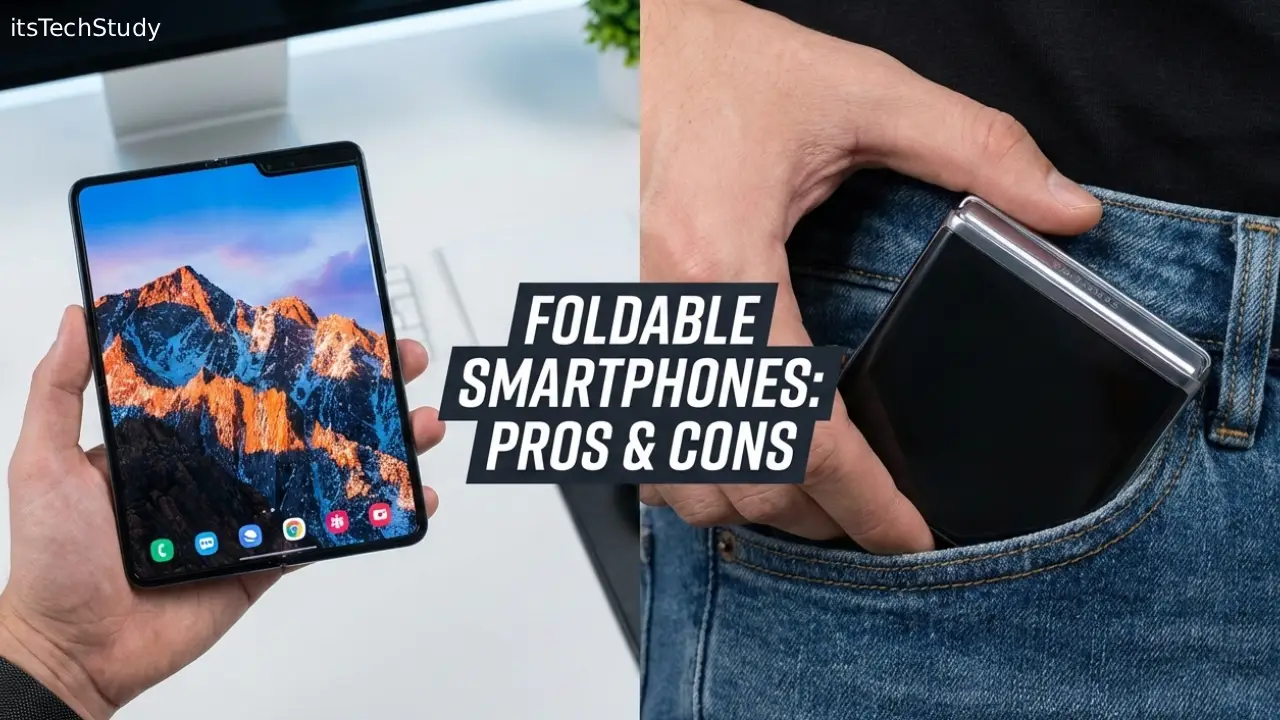
Foldable smartphones are mobile devices that use flexible display technology to bend or fold, allowing the phone to transform between different form factors. Unlike traditional phones with rigid glass screens, foldables use advanced materials that can withstand thousands of folds.
Common Foldable Phone Designs
Foldable phones typically fall into two main categories:
- Book-style foldables: Open like a book, offering a tablet-like display inside
- Clamshell foldables: Fold vertically, similar to classic flip phones
Each design serves different user needs, from multitasking professionals to users prioritizing portability.
The Technology Behind Foldable Smartphones
Flexible OLED Displays
At the heart of every foldable phone is a flexible OLED panel. These displays use plastic substrates instead of rigid glass, allowing them to bend without breaking while still delivering vibrant colors and deep contrast.
Advanced Hinge Mechanisms
The hinge is one of the most critical and complex components. Modern foldables use multi-link or water-drop hinge designs to:
- Reduce visible screen creases
- Improve durability
- Enable smooth folding motions
Ultra-Thin Glass (UTG)
To improve the premium feel and scratch resistance, manufacturers introduced ultra-thin glass, a chemically strengthened layer thin enough to bend yet tougher than plastic alone.
Pros of Foldable Smartphones
1. Larger Display Without Extra Bulk
One of the biggest advantages of foldable smartphones is the ability to carry a large screen device in a compact form. When unfolded, users enjoy tablet-like real estate ideal for:
- Watching videos
- Reading articles
- Editing documents
- Gaming
2. Enhanced Multitasking Capabilities
Foldables shine when it comes to productivity. Many support:
- Split-screen apps
- Floating windows
- App continuity between folded and unfolded states
This makes them especially appealing to professionals who rely on mobile workflows.
3. Innovative and Premium Design
Foldable phones stand out instantly. For users who value cutting-edge design, they offer:
- A futuristic aesthetic
- Premium materials
- A clear departure from conventional smartphones
4. Improved User Experience for Media Consumption
The expanded screen enhances:
- Video streaming
- Social media browsing
- E-books and digital magazines
Content feels more immersive compared to standard smartphones.
5. Versatility in Daily Use
Clamshell foldables allow users to:
- Use the phone partially folded
- Prop it up for video calls
- Take hands-free photos
This flexibility adds real functional value beyond novelty.
Cons of Foldable Smartphones
1. High Price Point
Foldable smartphones are significantly more expensive than traditional phones due to:
- Complex manufacturing processes
- Specialized materials
- Lower production volumes
This makes them inaccessible for many budget-conscious consumers.
2. Durability Concerns
Despite improvements, foldables still face:
- Potential hinge wear over time
- Vulnerability to dust and debris
- Screen crease visibility
They require more careful handling compared to standard phones.
3. Thicker and Heavier Design
Foldable phones often weigh more and feel bulkier when folded, which may reduce comfort during prolonged use.
4. Software Optimization Limitations
Not all apps are fully optimized for foldable displays. Some users may experience:
- App scaling issues
- Inconsistent layouts
- Limited support from older applications
5. Battery Life Challenges
Powering larger displays in a compact body is difficult. Foldables may struggle with:
- Shorter battery life
- Slower charging speeds due to thermal constraints
Foldable Smartphones vs Traditional Smartphones
| Feature | Foldable Smartphones | Traditional Smartphones |
|---|---|---|
| Display Size | Expands to tablet-like screen | Fixed size |
| Portability | Compact when folded | Always full size |
| Price | Premium / High | Wide range |
| Durability | Moderate (improving) | High |
| Multitasking | Advanced | Limited |
| Design Innovation | High | Mature |
Who Should Consider a Foldable Smartphone?
Foldable smartphones are best suited for users who:
- Value multitasking and productivity
- Consume a lot of media content
- Enjoy early-adopter technology
- Are comfortable paying a premium for innovation
They may not yet be ideal for users seeking rugged durability or budget-friendly options.
Pros and Cons Summary
Advantages
- Large, immersive display
- Better multitasking
- Unique, premium design
- Versatile usage modes
- Future-ready technology
Disadvantages
- Expensive
- Durability still evolving
- Heavier than standard phones
- App compatibility issues
- Battery optimization challenges
Future of Foldable Smartphones
The future of foldable smartphones looks promising. Ongoing advancements in:
- Hinge durability
- Foldable glass technology
- Battery efficiency
- Software optimization
As manufacturing scales and competition increases, prices are expected to drop, making foldables more mainstream. Over time, foldable designs could become as common as today’s slab phones.
Conclusion: Are Foldable Smartphones Worth It?
Foldable smartphones represent one of the most exciting shifts in mobile technology in years. They offer meaningful benefits-larger displays, improved multitasking, and versatile form factors-while still facing challenges related to cost, durability, and software optimization.
For tech enthusiasts and productivity-focused users, foldable phones already deliver real value. For others, waiting another generation or two may provide a better balance of price and performance. As innovation continues, foldable smartphones are not just a trend-they’re a glimpse into the future of mobile computing.

About the Author
Tobias Hale is a technology writer and software analyst with a sharp eye on the ever-evolving world of digital innovation. With a deep passion for clean code, secure systems, and emerging technologies, Tobias brings clarity to complex topics - from the latest in operating system updates to cutting-edge software security practices.
Frequently Asked Questions (FAQ)
Q1: Are foldable smartphones durable enough for daily use?
Ans: Modern foldable smartphones are designed to withstand tens of thousands of folds. While not as rugged as traditional phones, durability has improved significantly with newer generations.
Q2: Do foldable phones support regular apps?
Ans: Yes, most standard apps work on foldable smartphones. However, some apps may not fully utilize the larger screen, depending on developer optimization.
Q3: Is the screen crease noticeable?
Ans: A crease is usually visible at certain angles, but it becomes less noticeable over time and during regular use.
Q4: Are foldable smartphones good for gaming?
Ans: Yes. The larger display enhances gaming experiences, though prolonged gaming may impact battery life more quickly.
Q5: Will foldable smartphones become cheaper in the future?
Ans: As technology matures and production increases, foldable smartphones are expected to become more affordable.







No Comments Yet
Be the first to share your thoughts.
Leave a Comment